Cardiff Central: A timeline of transformation
2025 marks 175 years since Cardiff Central Railway Station opened and it stands proudly at the heart of Wales' capital. To many, Cardiff Central Railway Station is not just a station but a place of memories - of welcomes and farewells, of everyday journeys and once-in-a-lifetime events. Its history is written not only in bricks and timetables but in the stories of the people who have passed through its doors. It's a living chronicle of the city’s growth, its aspirations, and its incredible past.
As the largest and busiest railway station in Wales, Cardiff Central has witnessed the transformations of Cardiff from a small port town to a bustling metropolitan capital. The station’s architecture is shaped by a blend of interwar civic design, Art Deco elegance, and now modern transport functionality - each layer reflecting its evolving role within the tapestry of Welsh heritage that continues today and for generations to come.
Over the coming year we will be telling the story of Cardiff Central and its development as work begins on its next chapter.
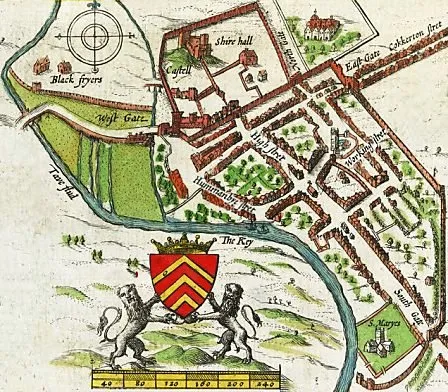
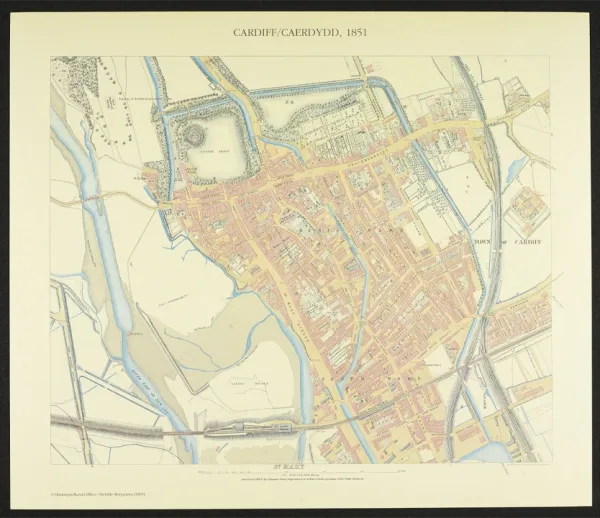
1840s: South Wales Railway surveyed the area to create a central Cardiff site, but it was flood-prone; Isambard Kingdom Brunel proposed and carried out a major re‑routing of the River Taff to the west to create a long, dry site for an east-west station in 1849. The new embankment made the site viable and paved the way for a mainline terminus. Brunel’s mid-19th-century realignment of the River Taff was a transformative engineering feat that reshaped Cardiff forever and laid the groundwork for its evolution from industrial port to capital city.
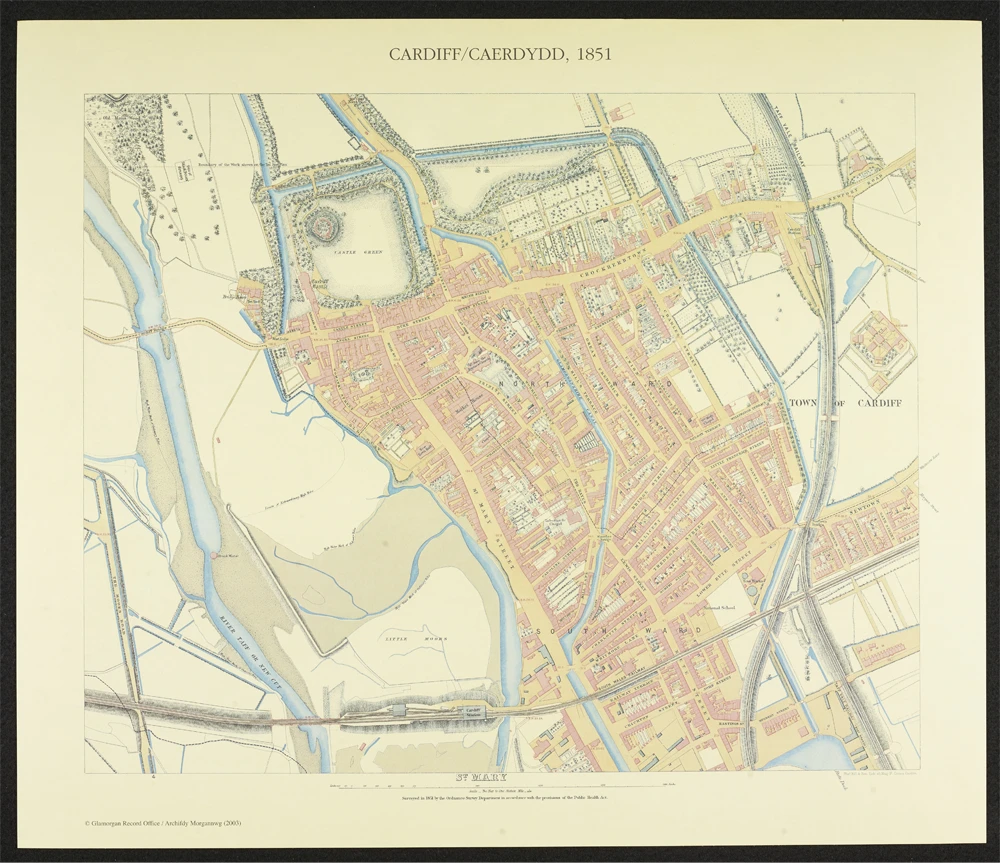
19 June 1850: Station opened as "Cardiff" on the South Wales Railway, giving the city a purpose‑built principal station on the new Gloucester-Swansea route.
Late 19th century: Early expansions and works established the station’s footprint alongside the Glamorganshire Canal and dockside infrastructure that had shaped Cardiff’s industrial growth.
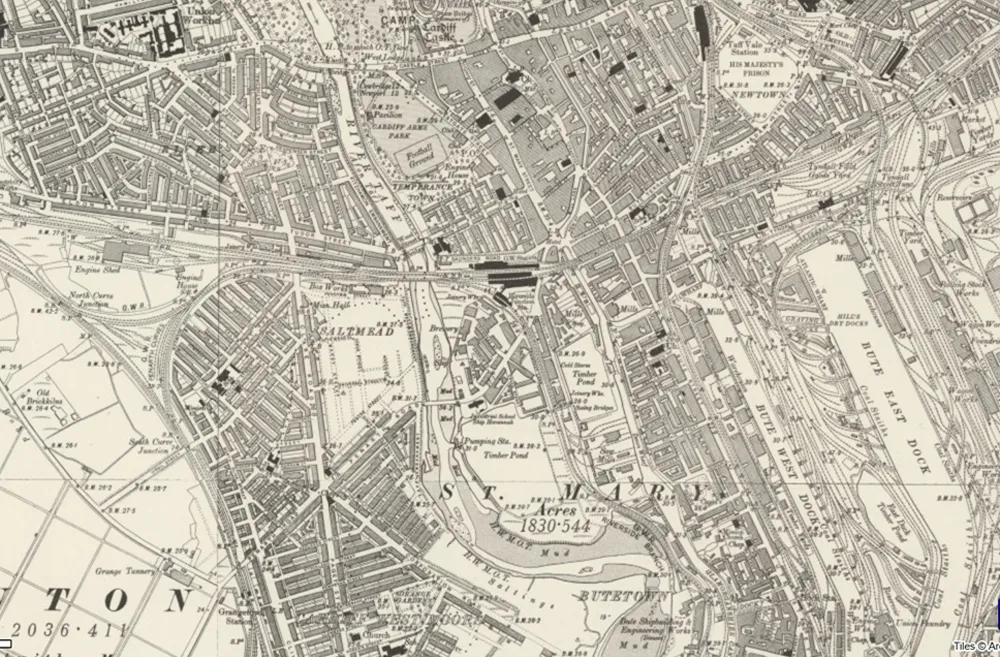
1896-1924: Phased enlargements and operational changes reflected growing passenger and goods traffic; the station was renamed "Cardiff General" in 1924 as part of wider network rebranding.
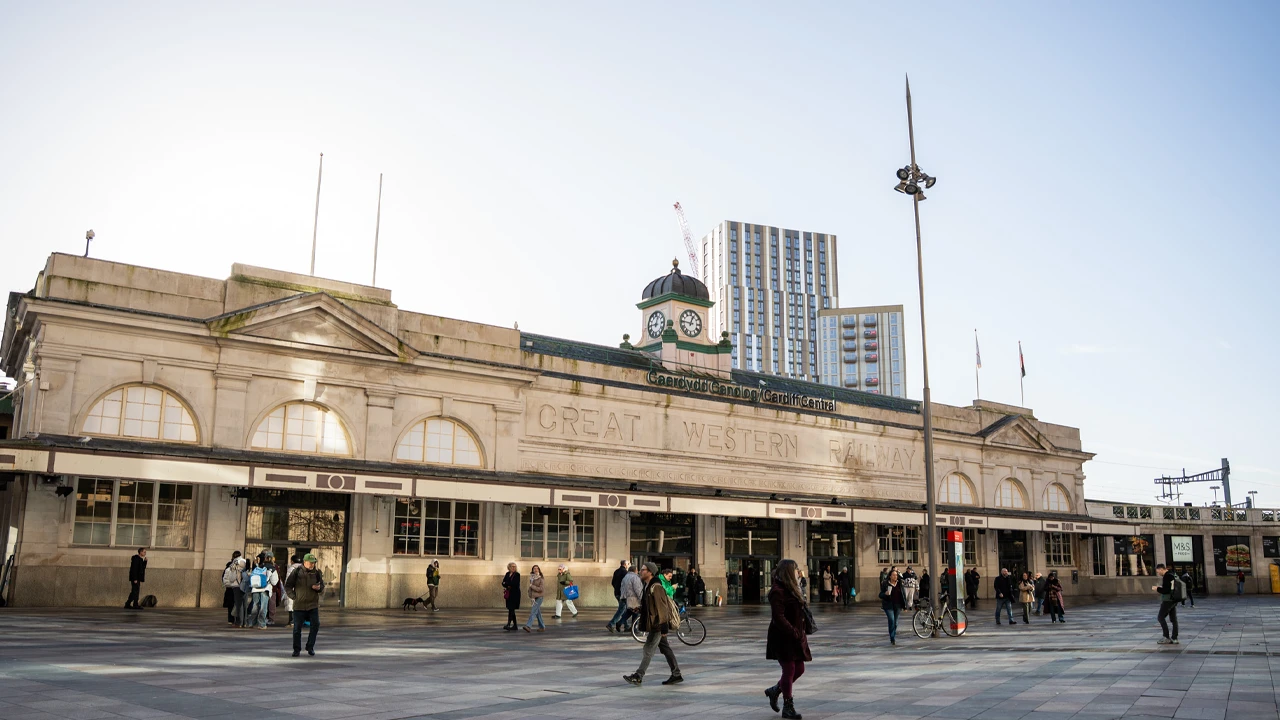
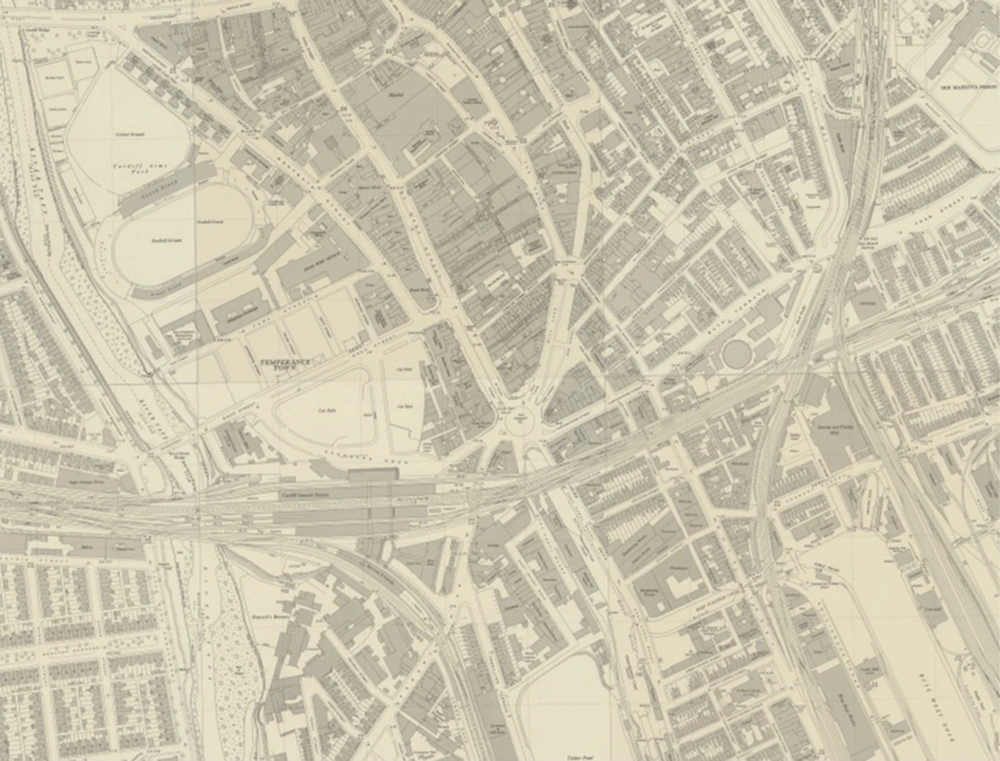
1931-1934: Major rebuild by the Great Western Railway produced the present prominent concourse/frontage, cupola and Art Deco interior fittings; the GWR’s works also involved significant townscape change north of the station. The nearby working-class district, Temperance Town, was cleared during the late 1930s in order to improve the outlook of the rebuilt station changing the physical and social landscape of Cardiff and the area around the station. Cardiff Central’s iconic 1930s Art Deco façade is clad in Portland stone - a fine, pale limestone quarried exclusively on the Isle of Portland in Dorset, on England’s Jurassic Coast. GWR often used Portland stone in its major city stations and was used by Percy Culverhouse - the architect of the station - to create a consistent architectural identity.
1939-1945: World War II brought both turmoil and drama to Cardiff Central. The station was a key strategic target due to its importance in moving troops, coal, and munitions. During the Cardiff Blitz of 1941, the area surrounding the station was heavily bombed, but the main building miraculously survived with only minor damage.
Mid 20th century adjustments: Integration with and later closure of adjacent Riverside platforms and reconfiguration of tracks and platforms to suit changing traffic patterns and rolling stock types. Post-war modernisation focused on services rather than style, adapting the Culverhouse shell to new technologies and flows.
20 December 1955: Cardiff officially named the capital of Wales.
May 1973: Official renaming to "Cardiff Central" to reflect its role as the capital and the city’s main hub.
1980s-1990s: Incremental platform and signalling upgrades improved capacity and reliability for regional and intercity services. Improvements focused on operational resilience rather than large public facing redevelopment.
1992: The station, its buildings and platforms, became Grade II listed.
2000s: Accessibility works, renewed passenger information systems, and gradual refurbishment of retail and waiting areas modernised the customer experience while leaving the main concourse and historic frontage largely intact.
2010s: Central Square integration: The station saw improved capacity and public realm interventions, a better link and improved flows between the station to Central Square development between the station, bus interchange and the city centre. These improvements set the scene for a major, coordinated enhancement programme. The new entrance on the south side of the station, was opened in September 2015 and the new Platform 8 on the south side of the station, opened in January 2017.
2020-2025: Strategic planning and business case: a programme of design and business case work aimed at transformational enhancements for Cardiff Central initiated, with funding partners including the Department for Transport, Cardiff Capital Region and the Welsh Government.
4 December 2025: Cardiff Central Enhancement Programme gets go-ahead: transformational change begins working to retain the station’s historic integrity, conserving its legacy and delivering a station that works for our customers, colleagues and communities and is fit for future generations.