Train accessibility
Details of our fleet will be included within this webpage as and when each type of train is refurbished or withdrawn and replaced.
Alternatively, you can access the info below.
Fleet accessibility specifications | Open as PDF
Welcome on board
This is an overview of our current and future fleet of trains, detailing the facilities available on board for people with reduced mobility and for cyclists We are in the process of introducing our new fleet of trains and this document will be updated when trains are refurbished or withdrawn.
Accessible travel
We want to make it as easy as possible for you to travel with us, if you have accessibility needs, we're here to help. You can find out more at tfw.wales/accessible-travel.
Assisted Travel
You can request an assistance booking in advance - up to 2 hours before your journey is due to start, 24/7. To make a booking or for more information about Passenger Assist:
- Call our Assisted Travel team 03330 050 501
- RelayUK 18001 03330 050 501
- Visit tfw.wales/booking-assistance-form
You can also “turn up and go” without booking assistance in advance. We'll provide assistance to get you to your destination. If you would like to know more about our services on board, please contact the Assisted Travel team. They can assist in planning your journey and can suggest alternative services for you. For information on passenger assistance, please visit tfw.wales/passenger-assistance.
Assistance during your journey
If you need help boarding or alighting the train, assistance will be provided by the conductor or station staff where available. Information on staffed stations and their availability can be found in the booklet “Making Rail Accessible - helping older and disabled passengers.”
Wheelchairs and mobility scooters
You can bring your wheelchair and mobility scooter on board our trains, provided they meet the size and weight
requirements.
- dimensions of up to 700mm x 1200mm (including footplates);
- a turning radius of 900mm; and
- a maximum combined weight (wheelchair and passenger) of 300kg.
You can check all stations' accessibility at tfw.wales/station-accessibility.
Contact us
We can help with every stage of your journey and welcome your feedback. Find all the ways you can get in touch at tfw.wales/help-and-contact.
Online
Plan and check your journey at tfw.wales, nationalrail.co.uk and third-party ticket retailers.
Social media
Message us on WhatsApp 07790 952 507
Over the phone
Call our call centre 03333 211 202
Monday - Sunday: 08:00 - 20:00
Calls to our number from BT phones will be charged local rates.
By post
FREEPOST
TFWRAIL CUSTOMER RELATIONS
Chat to us in person
Our station colleagues and customer help point staff will be happy to answer any questions and provide information. All our trains have a conductor on board who will be happy to help with any queries.
Getting back to you
When you get in touch on social media (WhatsApp), we aim to respond within 10 minutes (during opening hours). Find out more about our social media policy at tfw.wales/social-media-policy. When you write to us by post, or via our webform, we'll send you an acknowledgement. We aim to respond within 10 working days (excluding weekends and bank holidays), at very busy periods it may take up to 20 working days. If you contact us by phone and we can't answer your query immediately, we aim to call you back within 3 working days.
Alternative formats
All our documentation complies with Welsh language standards and is available bilingually. Alternative formats, such as large print, Braille, and audio, are available free of charge from the Customer Relations team. Large-print documents are provided within seven days, and other formats as soon as possible.
On board facilities
These are the facilities you’ll find on board our trains.
Accessibility
Access ramps.
Level boarding or ramps for wheelchairs and mobility scooter access.

Assistance buttons.
So you can call for help when needed.
Priority seating.
With easier access and a little extra room.
Wheelchair users' spaces.
Number of spaces vary.
Universal accessible toilet¹.
Door widths vary.

Baby changing¹.
Within universal accessible toilet.
Other facilities

Charging sockets.
Three-pin and USB, varies.

Visual information screens.

Wi-Fi.

Public Address.
1. Not Class 398.
Summary
This is a quick look at accessibility and other features available on each class of our trains.
| Wheelchair users' spaces | Priority seating | Universal accessible toilet and baby changing | Toilet (not wheelchair accessible) | At-seat catering | Restaurant car | |
| Class 150 | 2 | 13 | 1 | 0 | No | No |
| Class 153 | ||||||
| 153/3 + 153/5 | 3 | 12 | 1 | 1 | No | No |
| 153/3 + 153/9 | 3 | 12 | 1 | 0 | No | No |
| Class 158 | 2 | 14 | 1 | 1 | Yes | No |
| Mark 4 | 3 | 24 | 2 | 3 | Yes | Yes |
| Class 230 | 2 | 17 | 1 | 0 | No | No |
| Class 197 | ||||||
| 2 carriages | 2 | 14 | 1 | 0 | Yes | No |
| 3 carriages | 2 | 22 | 1 | 1 | Yes | No |
| Class 231 | 2 | 22 | 1 | 0 | No | No |
| Class 756 | ||||||
| 3 carriages | 2 | 18 | 1 | 0 | No | No |
| 4 carriages | 2 | 26 | 1 | 0 | No | No |
| Class 398 | 2 | 12 | 0 | 0 | No | No |
Class 150
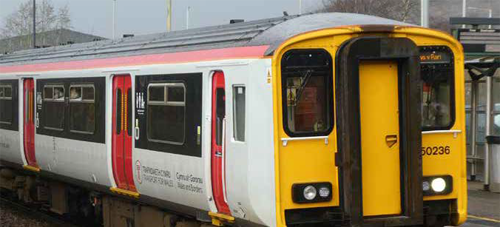
Built in 1987, Class 150s are two carriage diesel trains.
We have 19 in our fleet.
Routes
These are the most common routes where you'll find Class 150 trains.
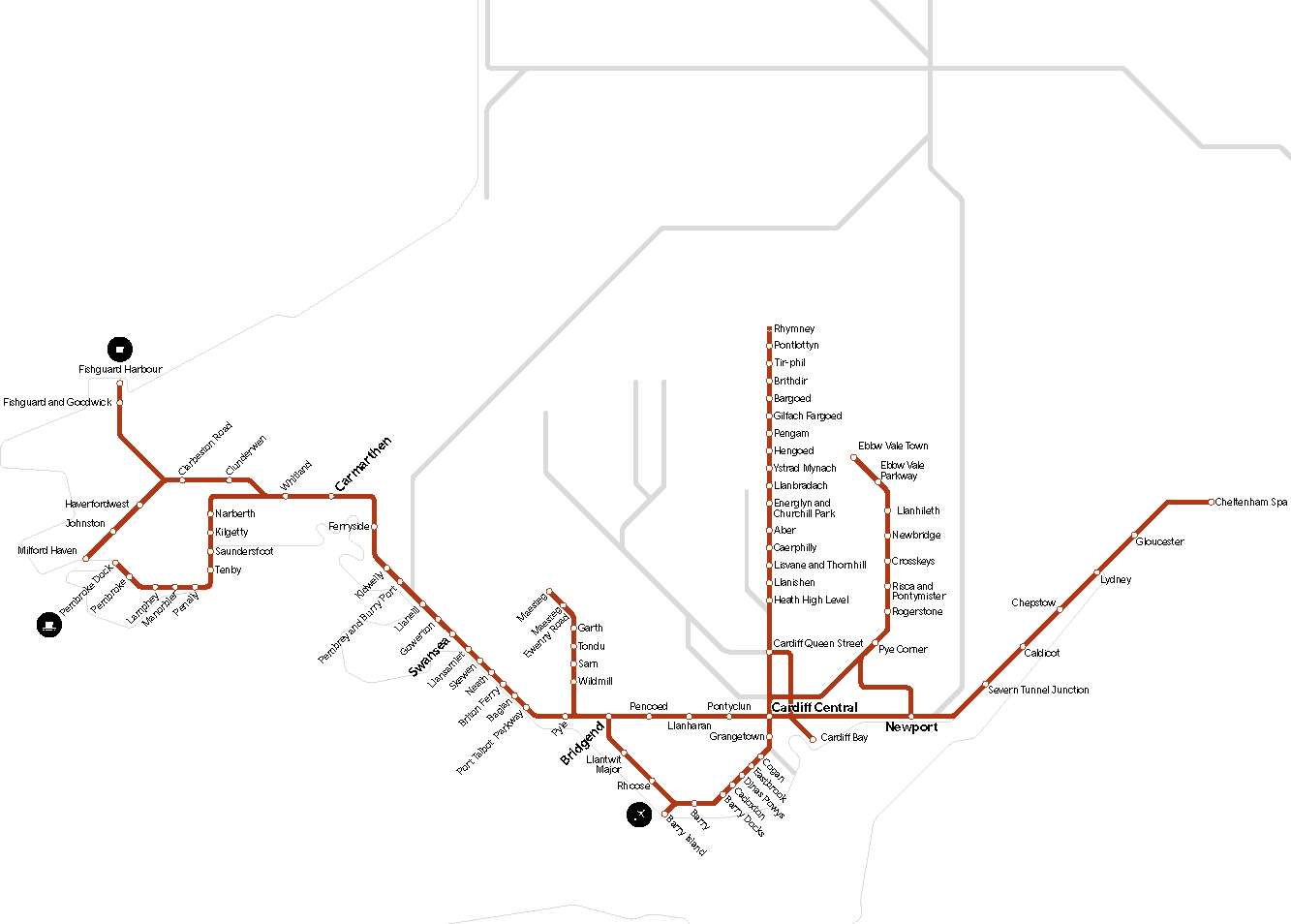
- West Wales to Swansea and Cardiff
- Maesteg to Ebbw Vale
- Treherbert to Cardiff
- Pontypridd to Cardiff Bay
- Rhymney to Cardiff, Barry Island and Bridgend via the Vale of Glamorgan
- Cardiff - Cheltenham Spa
Carriage layout
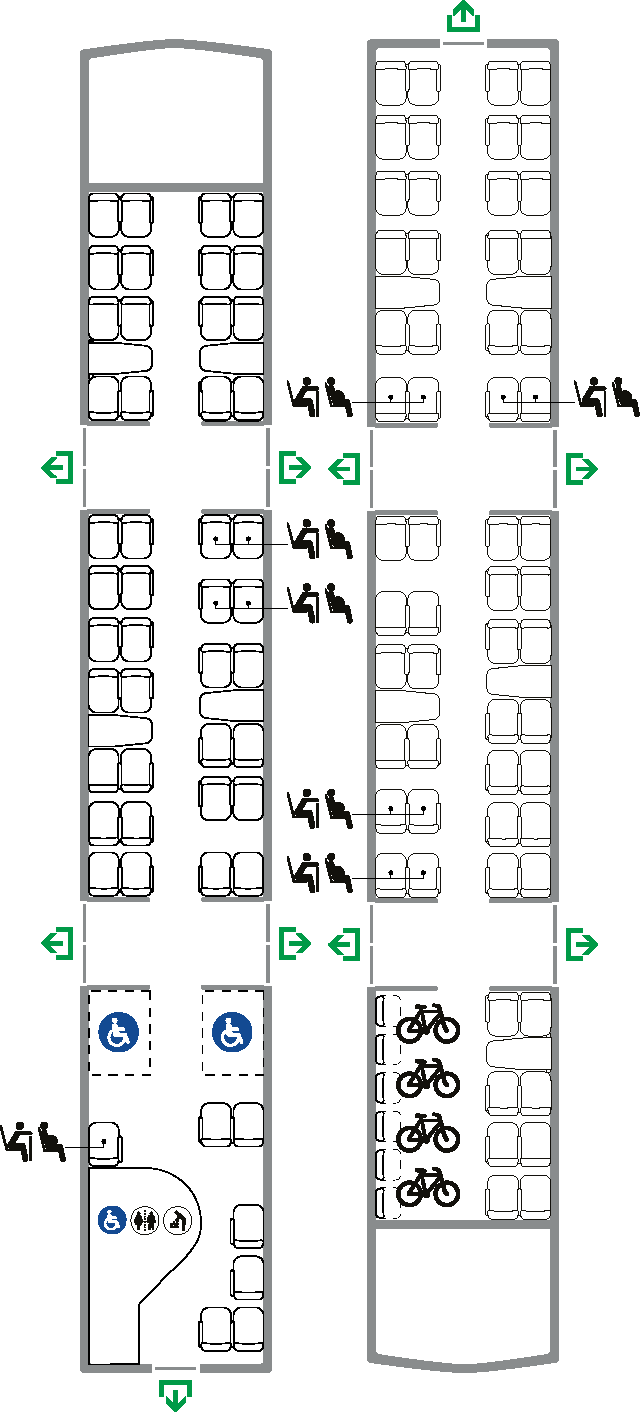
Accessibility

Two wheelchair users' spaces
One universal accessible toilet.
Door width 825mm

13 priority seats.
Other features
107 seats and either four or six additional tip-up seats.

Four cycle spaces.
Class 153
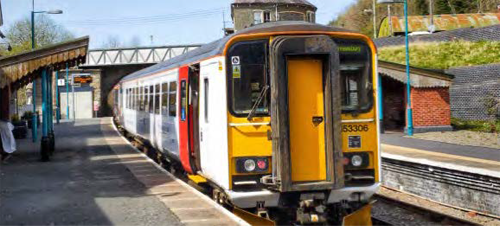
Built between 1987 and 1988, Class 153s are single carriage diesel trains which are coupled as pairs.
We have 3 types of unit in service which are coupled as follows:
- Class 153/3 with Class 153/5 (Active Travel). We have 6 in our fleet.
Heart of Wales line only. - Class 153/3 with Class 153/9. We have 17 in our fleet.
Routes
These are the most common routes where you'll find Class 153 trains.
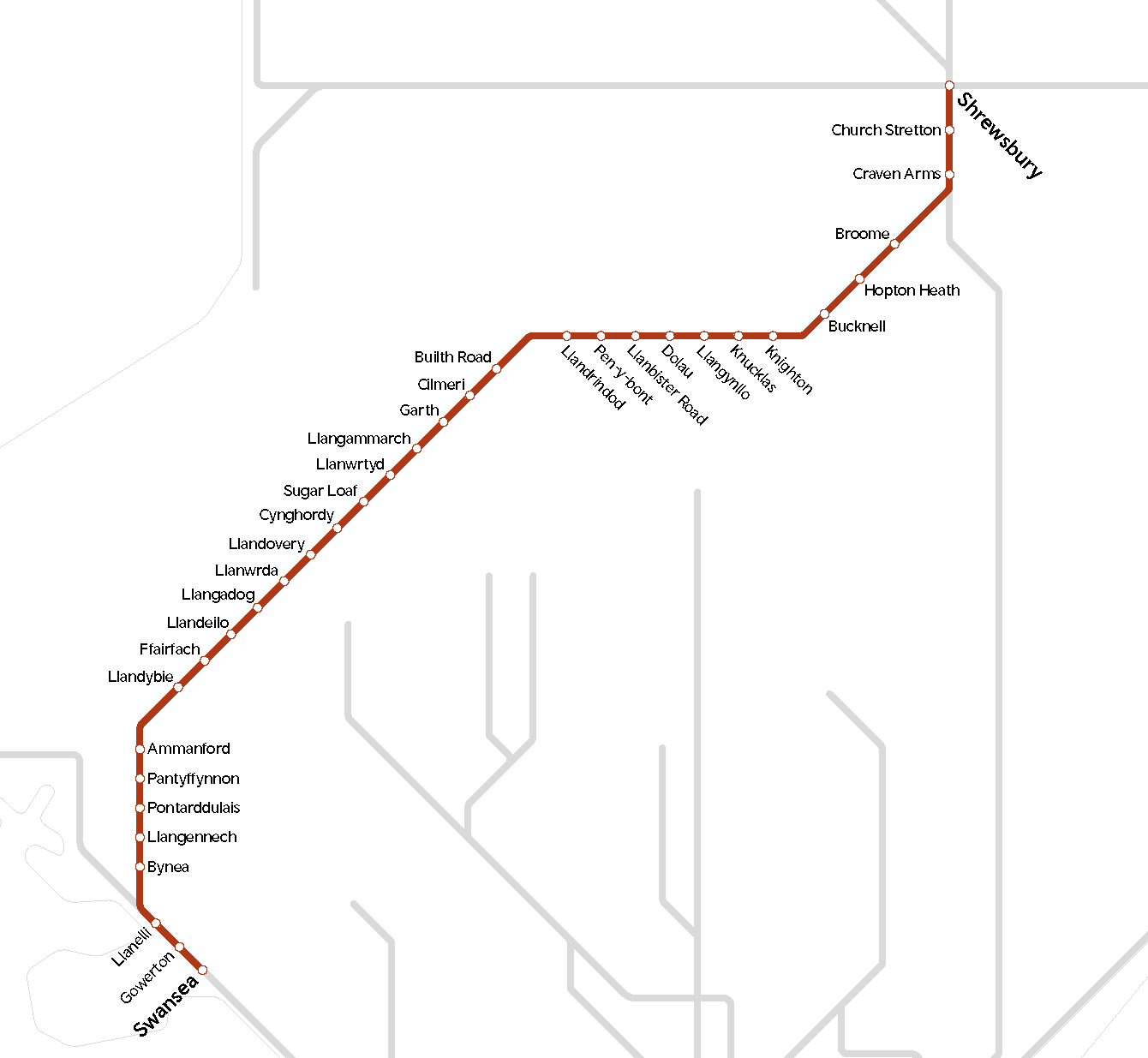
- Swansea to Shrewsbury via the Heart of Wales Line.
Carriage layout
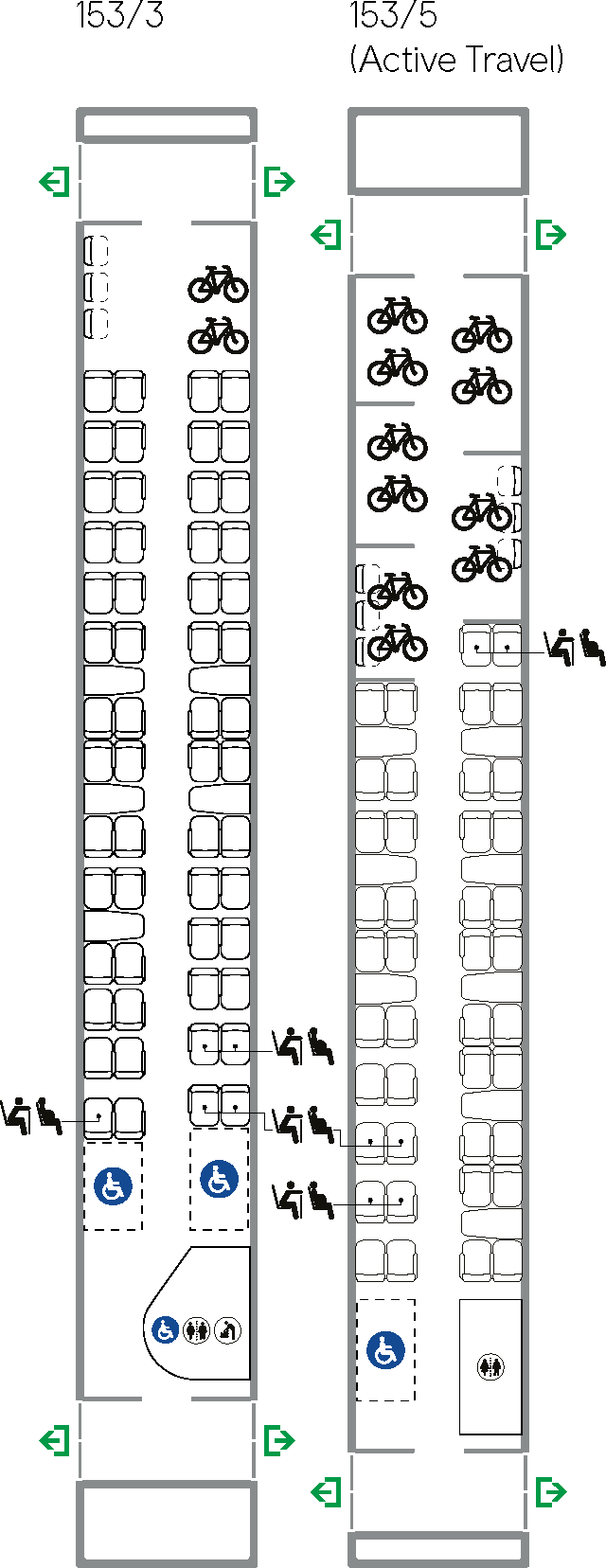
Accessibility
Three wheelchair users' spaces.
One universal accessible toilet.
Door width 820mm
12 priority seats.
Other features
98 seats and nine additional tip-up seats.
Eight cycle spaces and flexible space for another four cycles.

One toilet, not wheelchair accessible.
Carriage layout
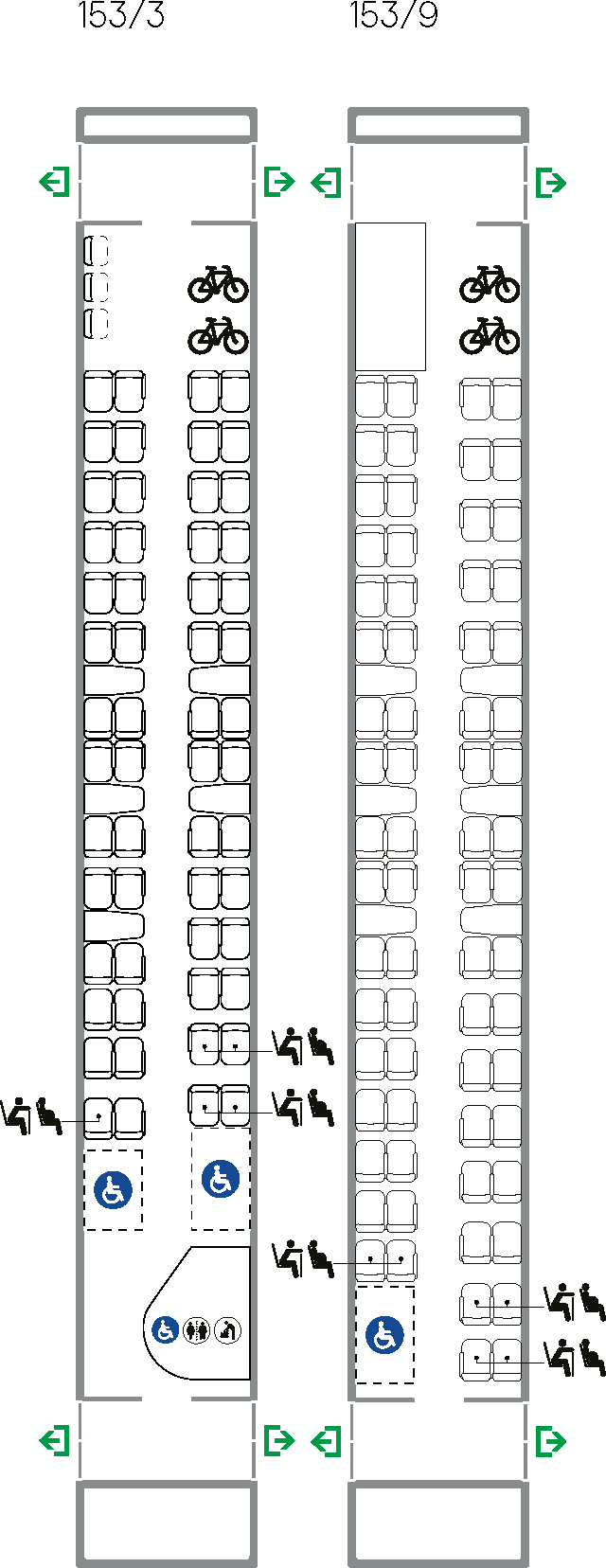
Accessibility
Three wheelchair users' spaces.
One universal accessible toilet.
Door width 820mm
12 priority seats.
Other features
126 seats and six additional tip-up seats.
Four cycle spaces.
Class 158
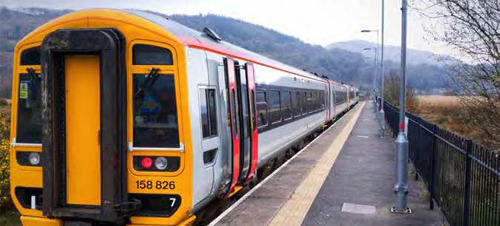
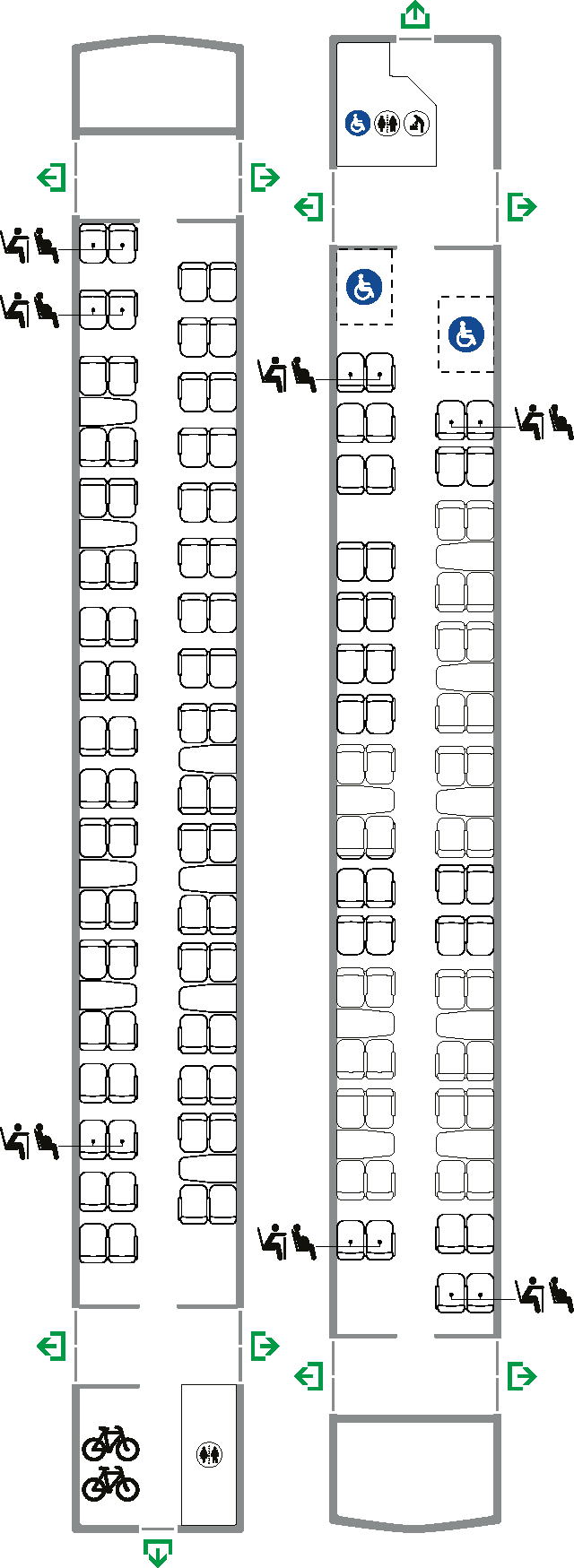
Built between 1989 and 1992, Class 158s are two carriage diesel trains. We have 22 in our fleet.
Class 158s have a smaller universal accessible toilet and limited room to manoeuvre a wheelchair.
Routes
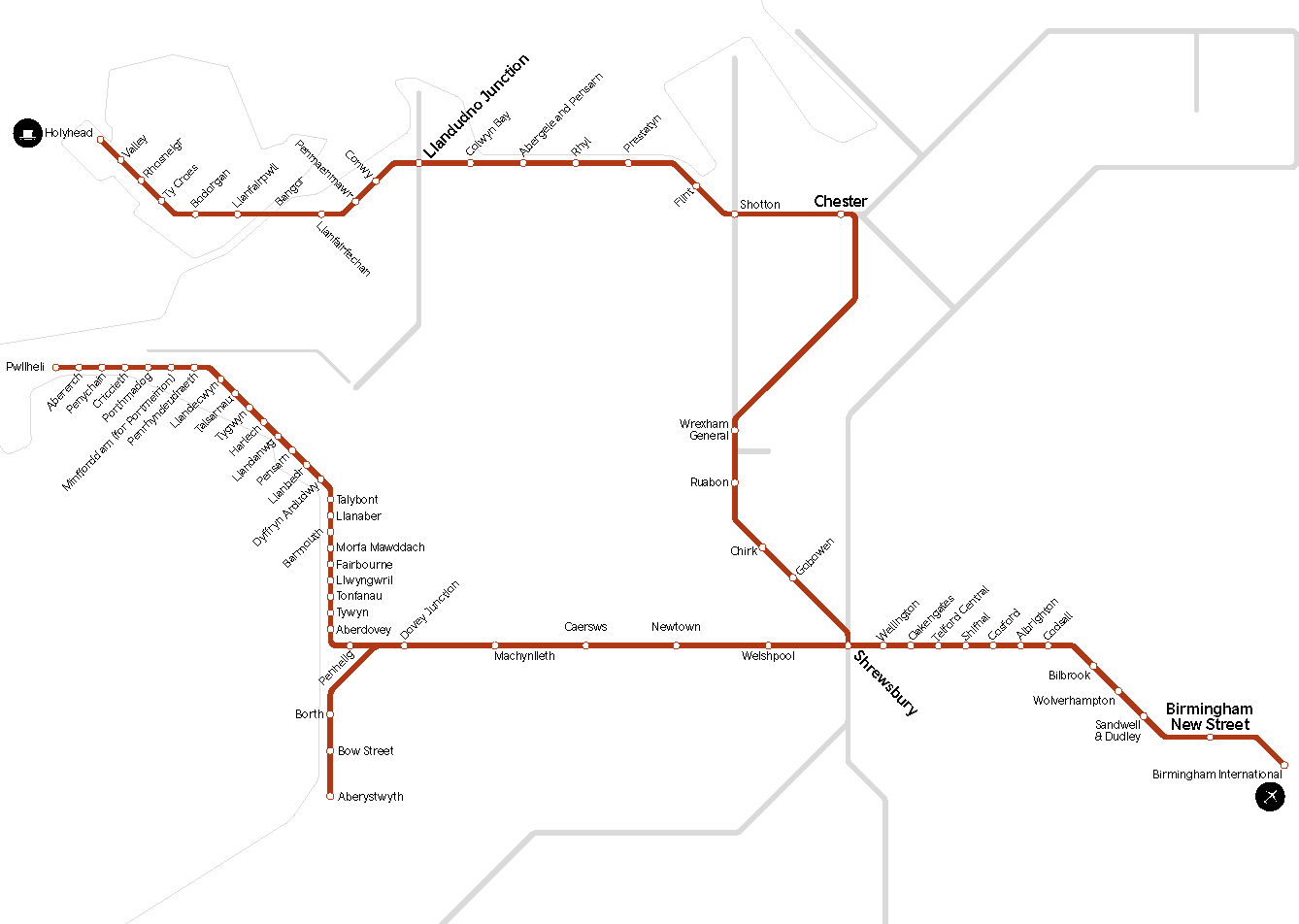
These are the most common routes where you'll find Class 153 trains.
- Holyhead - Shrewsbury - Birmingham.
- Shrewsbury - Pwllheli and Aberystwyth via the Cambrian Coast Line.
Carriage layout
Accessibility
Two wheelchair users’ spaces.
One universal accessible toilet.
Door width 780mm
14 priority seats.
Other features
134 seats.
Two cycle spaces.
One toilet, not wheelchair accessible.

At-seat catering on selected services.
Mark 4 Coach
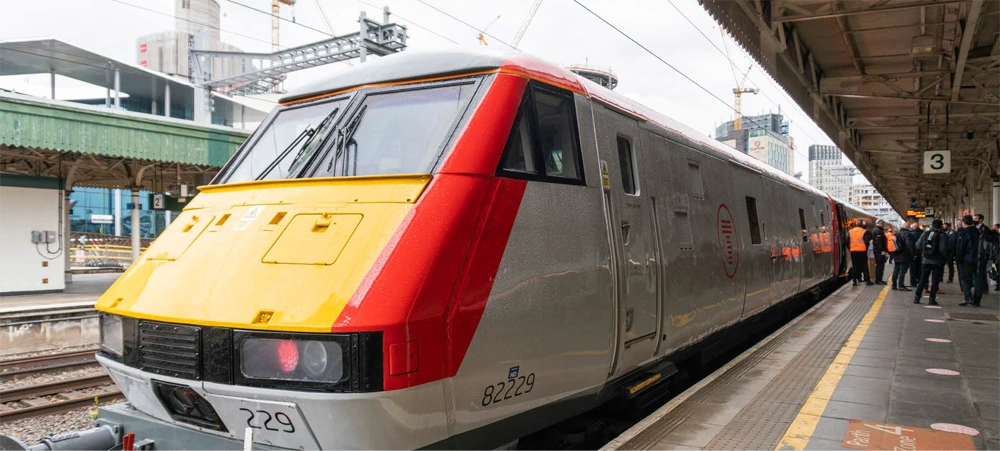
Built between 1989 and 1992, Mark 4 Coaches are locomotive-hauled coaches.
We have seven trains of five coaches in our fleet.
Routes
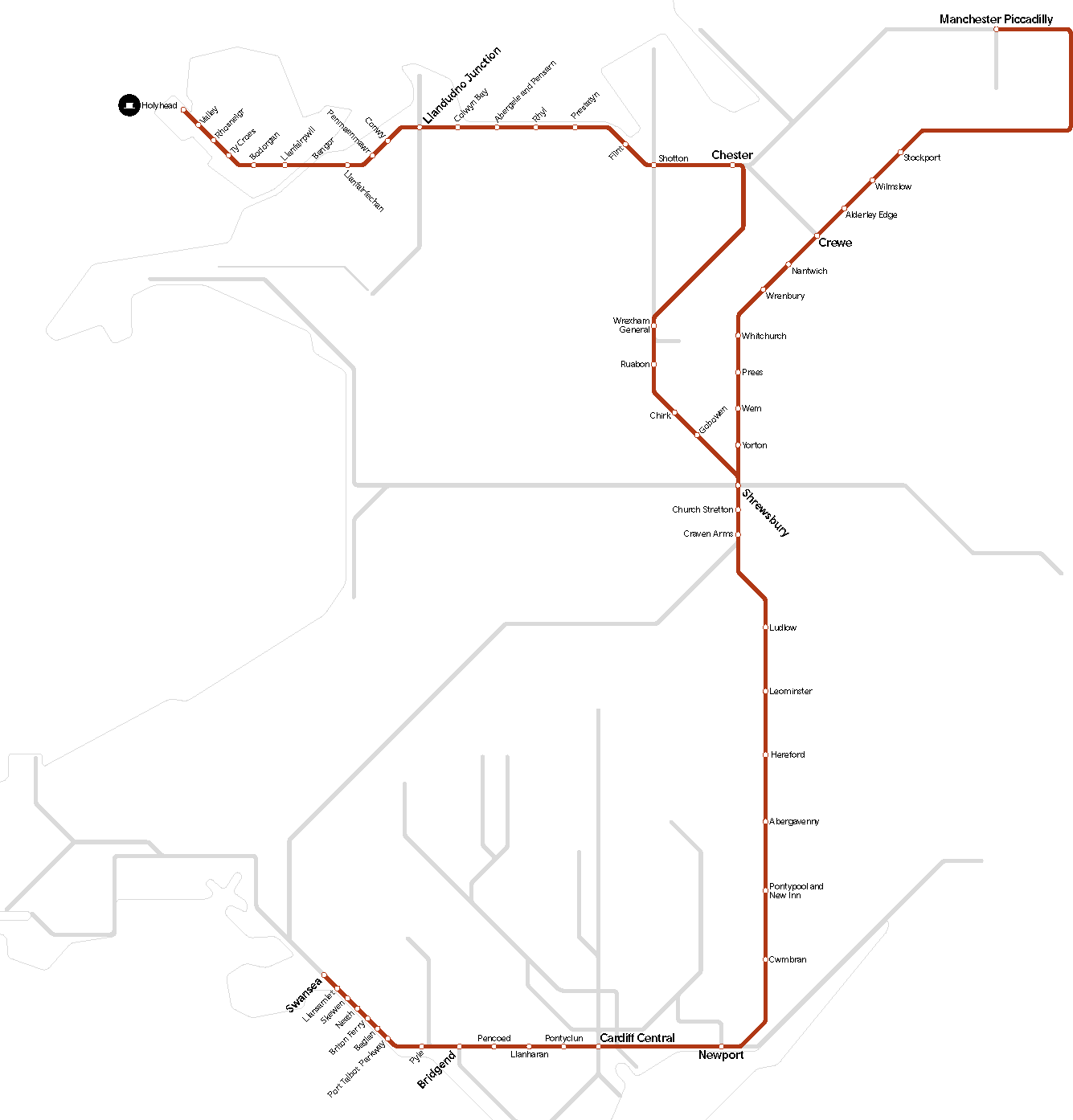
These are the most common routes where you’ll find Mark 4 Coach trains.
- Swansea to Cardiff, Shrewsbury and Manchester via the Marches Line.
- Cardiff to Shrewsbury, Chester and Holyhead.
Carriage layout
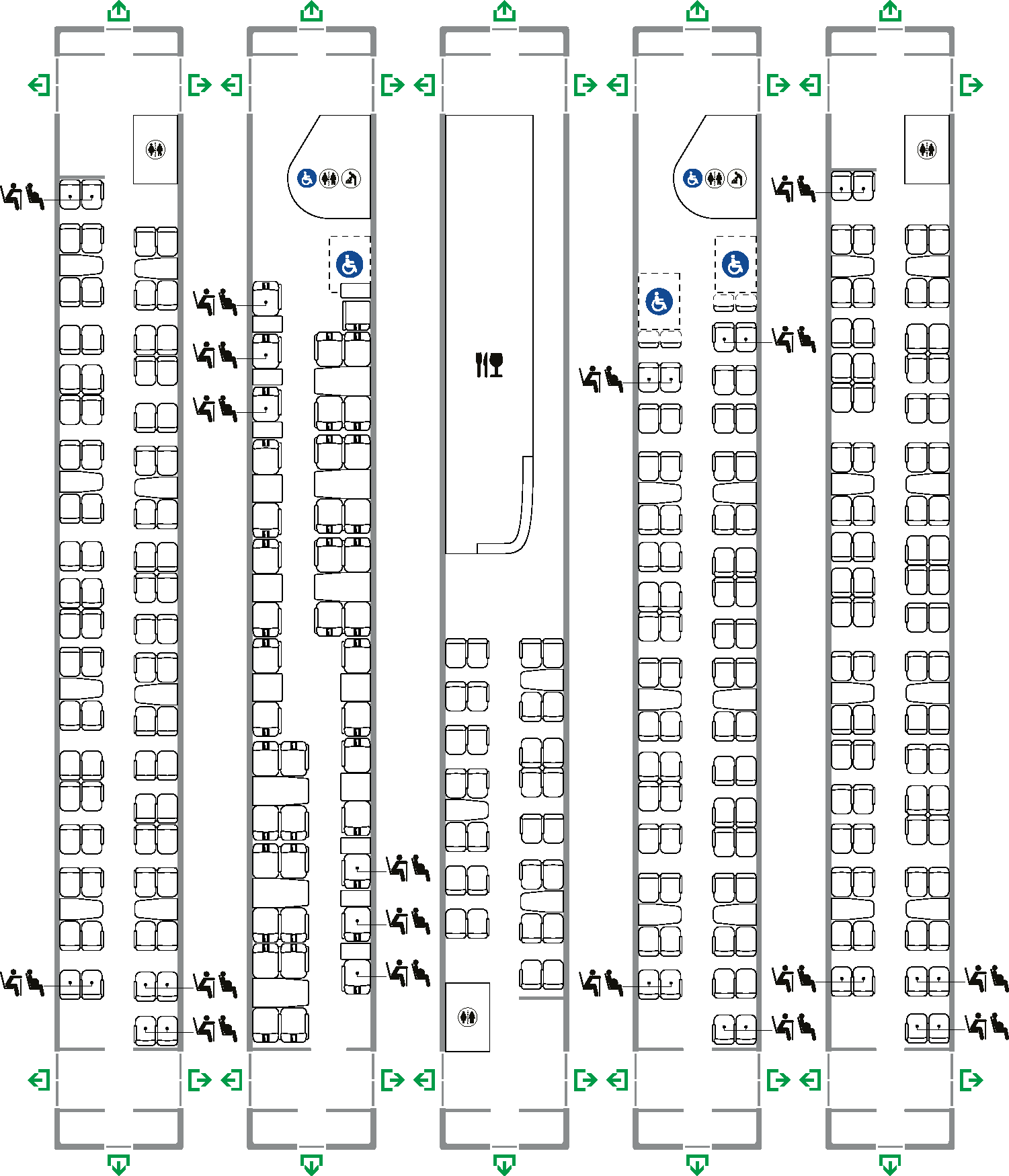
Accessibility
Two standard class wheelchair users' spaces.
Two First Class wheelchair users' spaces.
Two universal accessible toilets.
Door width 800mm.
30 priority seats.
Other features
246 standard class seats and four additional tip-up seats.
At-seat catering on selected services.

41 First Class seats.

Restaurant car.
Five cycle spaces, within separate engine carriage.
Three toilets, not wheelchair accessible.
Class 230
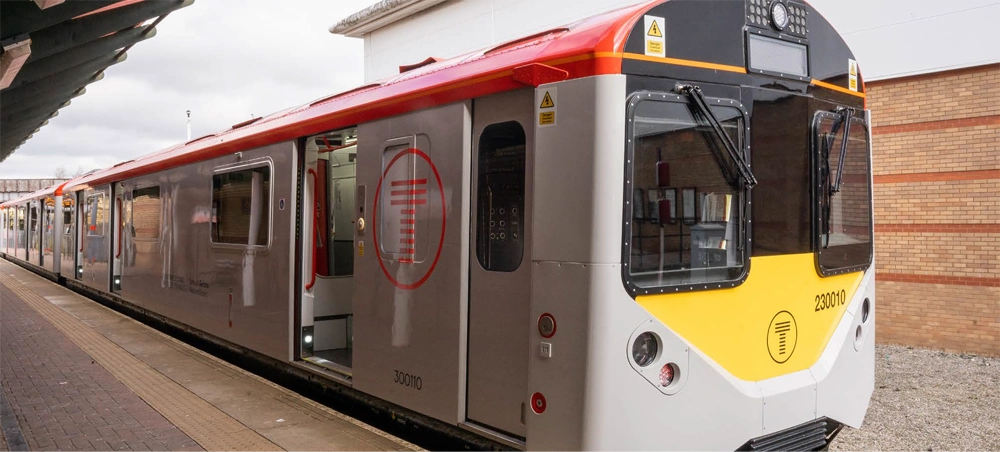
Class 230 is a new concept of Diesel, Battery and Battery Hybrid Electric Multiple Unit (BHMU) train. Repurposed in 2019 - 2021 from London Underground's (LUL's) D78 stock trains.
Routes
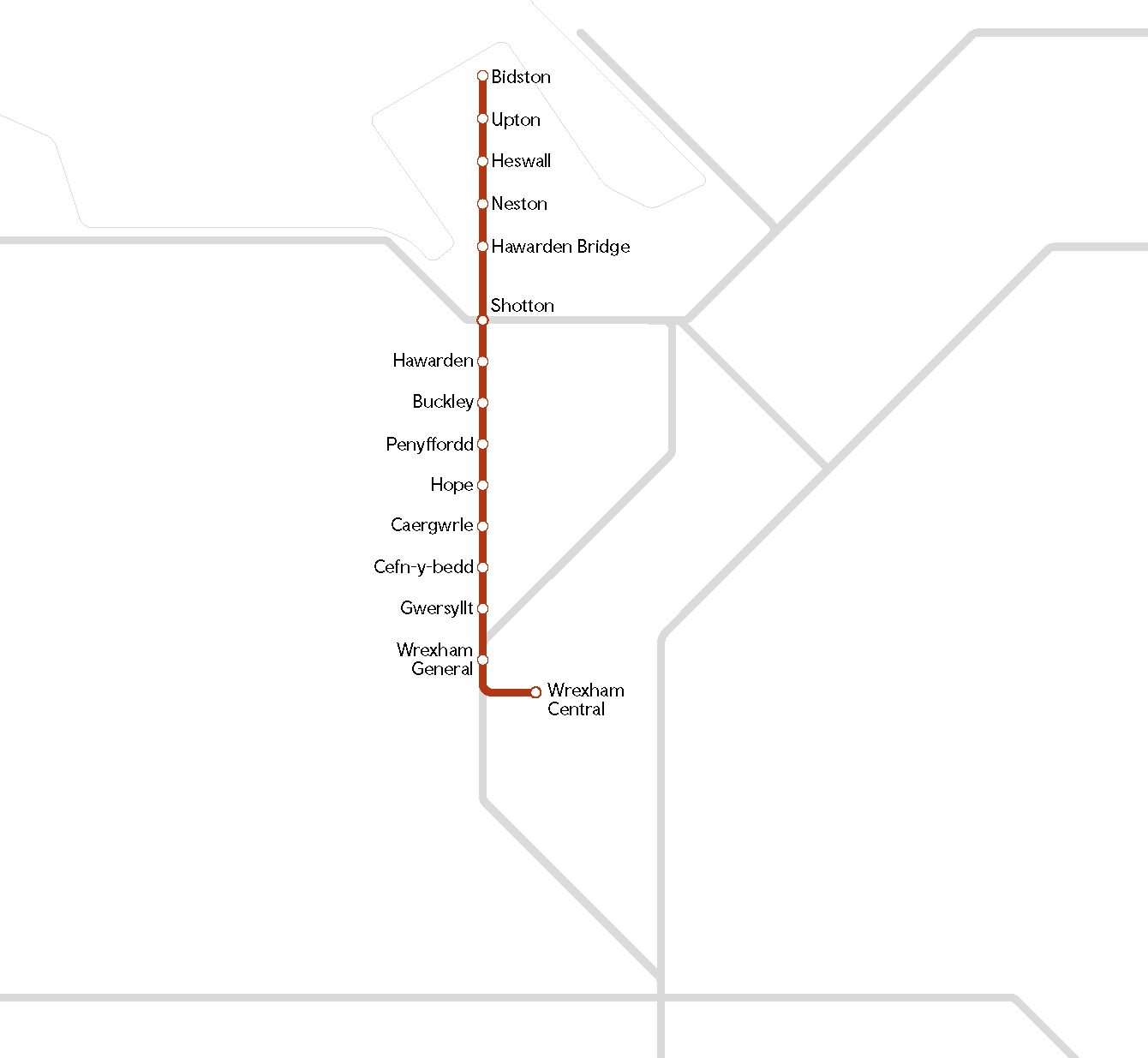
This is the most common route where you'll find Class 230 trains.
- Wrexham Central to Bidston.
Carriage layout
Accessibility
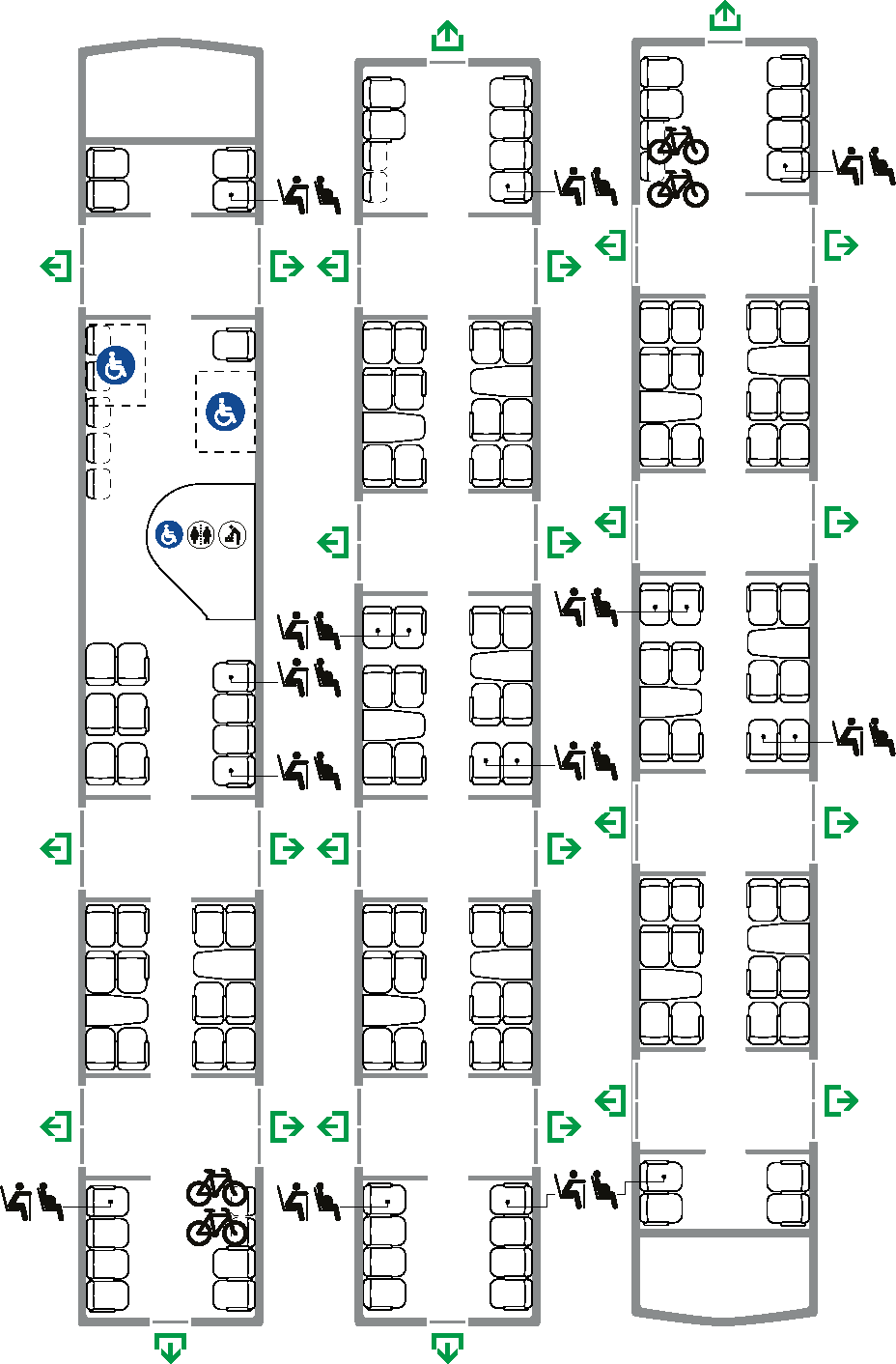
Two wheelchair users' spaces.
One universal accessible toilet.
Door width 830mm.
17 priority seats.
Other features
129 seats and 10 additional tip-up seats.
4 flexible cycle spaces.
Class 197
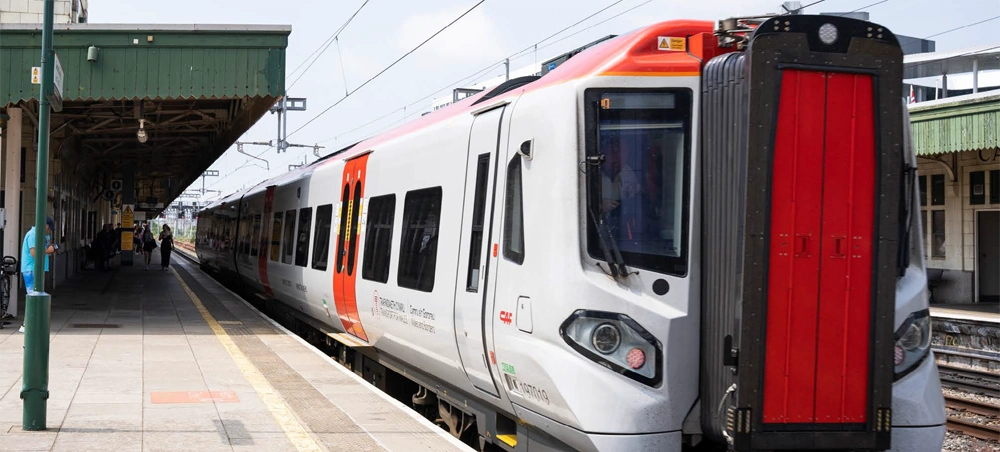
Built between 2020 and the present, Class 197s are two and three carriage diesel trains. We have 77 in our fleet - 51 with two carriages and 26 with three carriages.
Routes
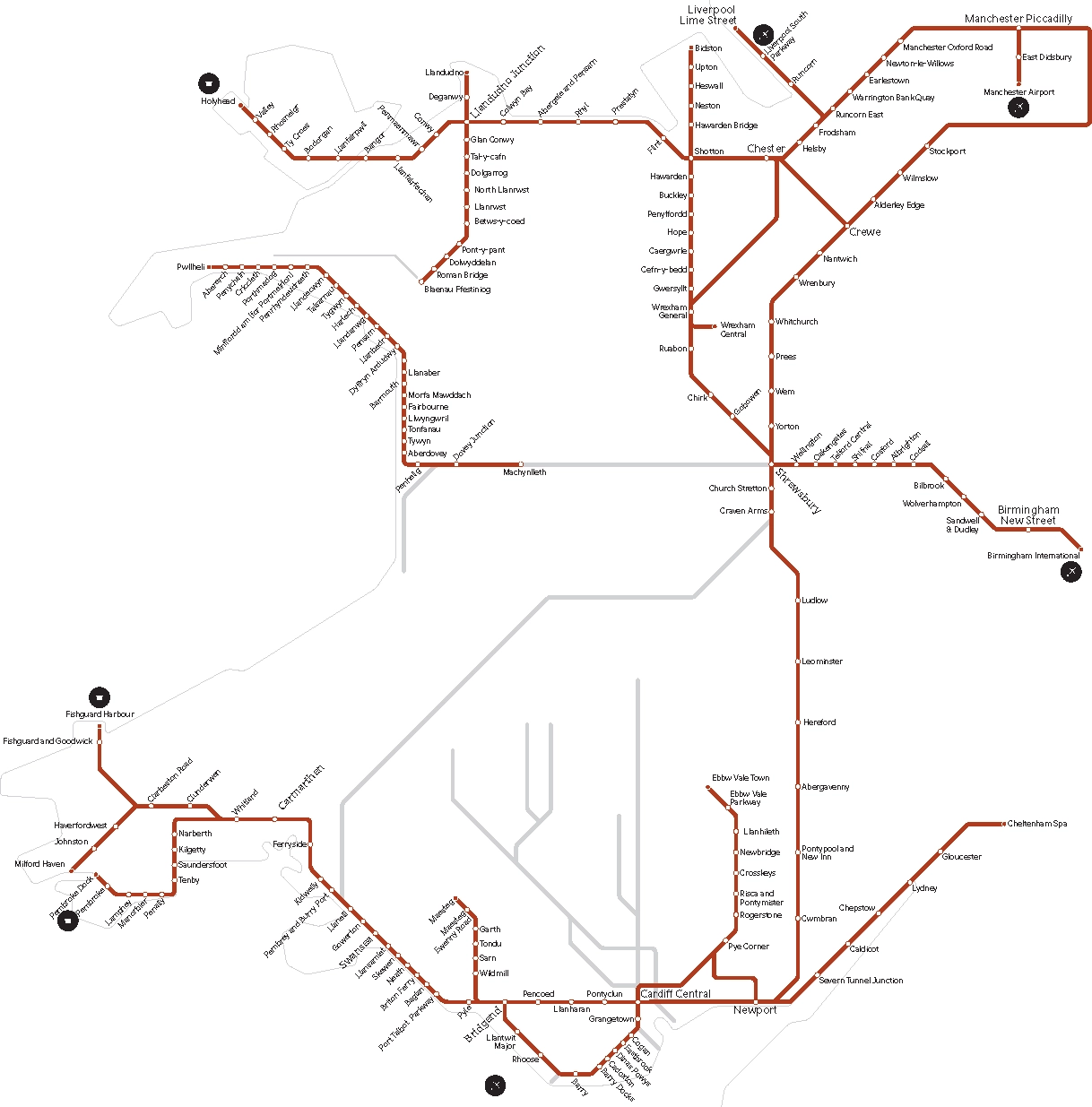
These are the most common routes where you'll find Class 197 trains.
- Maesteg to Ebbw Vale.
- Cardiff to Carmarthen, Ebbw Vale and Bridgend (Via Vale of Glamorgan).
- Carmarthen to Milford Haven, Fishguard Harbour and Pembroke Dock.
- Chester to Manchester Airport (via Frodham), Liverpool Lime St, Shrewsbury (via Crewe), Shrewsbury (via Wrexham) and Holyhead.
- Crewe to Manchester Piccadilly (via Wilmslow).
- Llandudno to Blaenau Ffestiniog.
- Cardiff to Cheltenham Spa.
- Shrewsbury to Birmingham and Cardiff.
- Wrexham Central to Bidston.
To support when 230s are not available. - Machynlleth - Pwllheli
Carriage layout
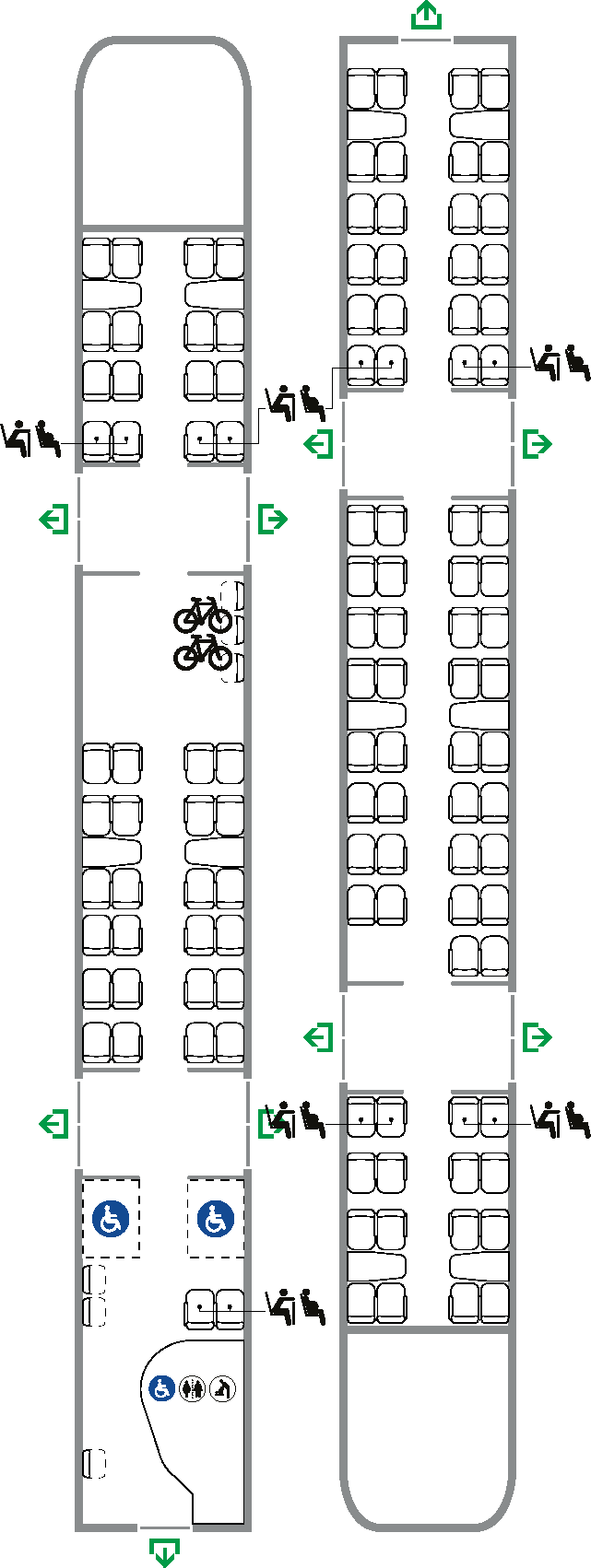
Two carriages
Accessibility
Two wheelchair users' spaces.
One universal accessible toilet.
Door width 800mm.
14 priority seats.
Other features
116 seats and 6 additional tip-up seats.
Two flexible cycle spaces.
Carriage layout
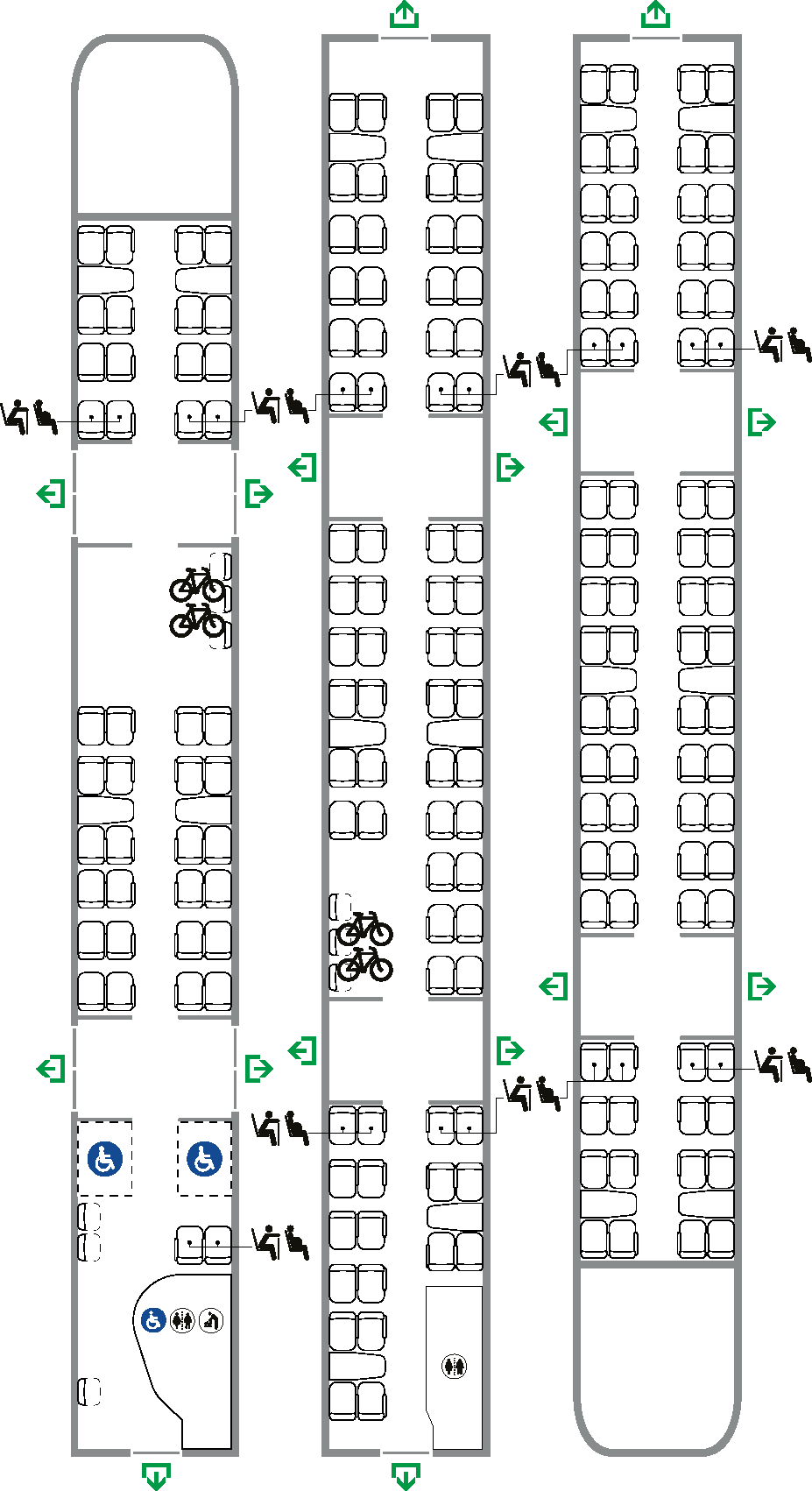
Three carriages
Accessibility
Two wheelchair users' spaces.
One universal accessible toilet.
Door width 800mm.
22 priority seats.
Other features
190 seats and nine additional tip-up seats.
Four flexible cycle spaces.
One toilet, not wheelchair accessible.
Carriage layout
Three carriages, with wider seats
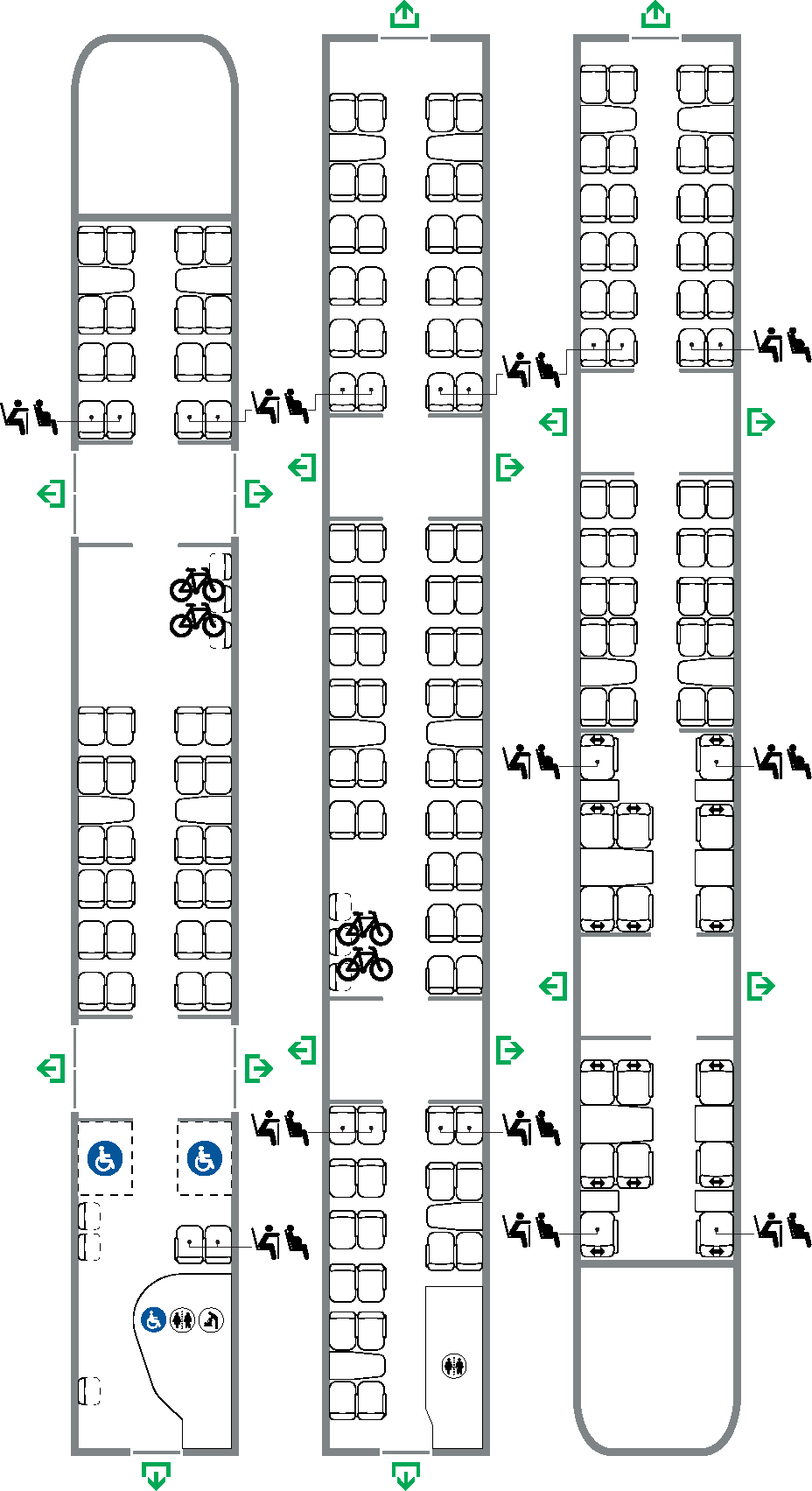
Accessibility
Two wheelchair users' spaces.
One universal accessible toilet.
Door width 800mm.
22 standard width priority seats and four wider priority seats.
Other features
158 standard width seats and nine additional tip-up seats.
Four flexible cycle spaces.
16 wider seats.
One toilet, not wheelchair accessible.
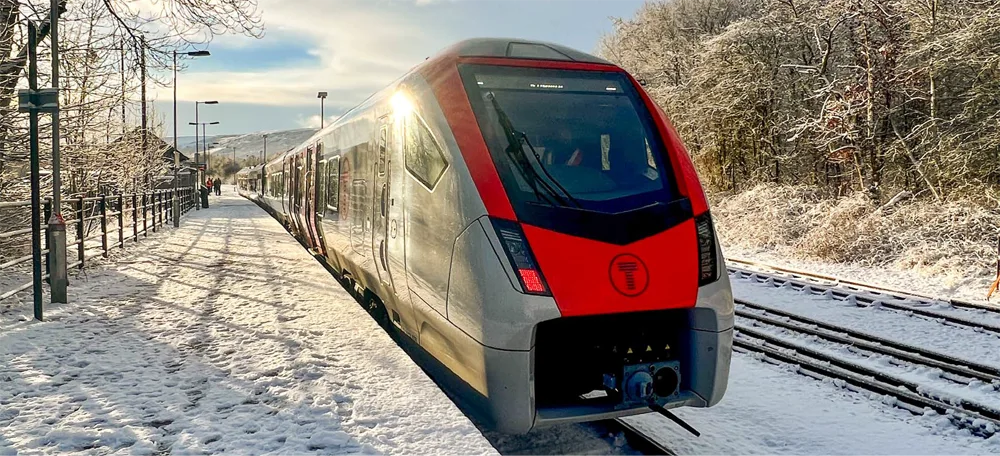
Class 231
Built between 2020 and the present, Class 231s are four carriage diesel trains. We have 11 in our fleet.
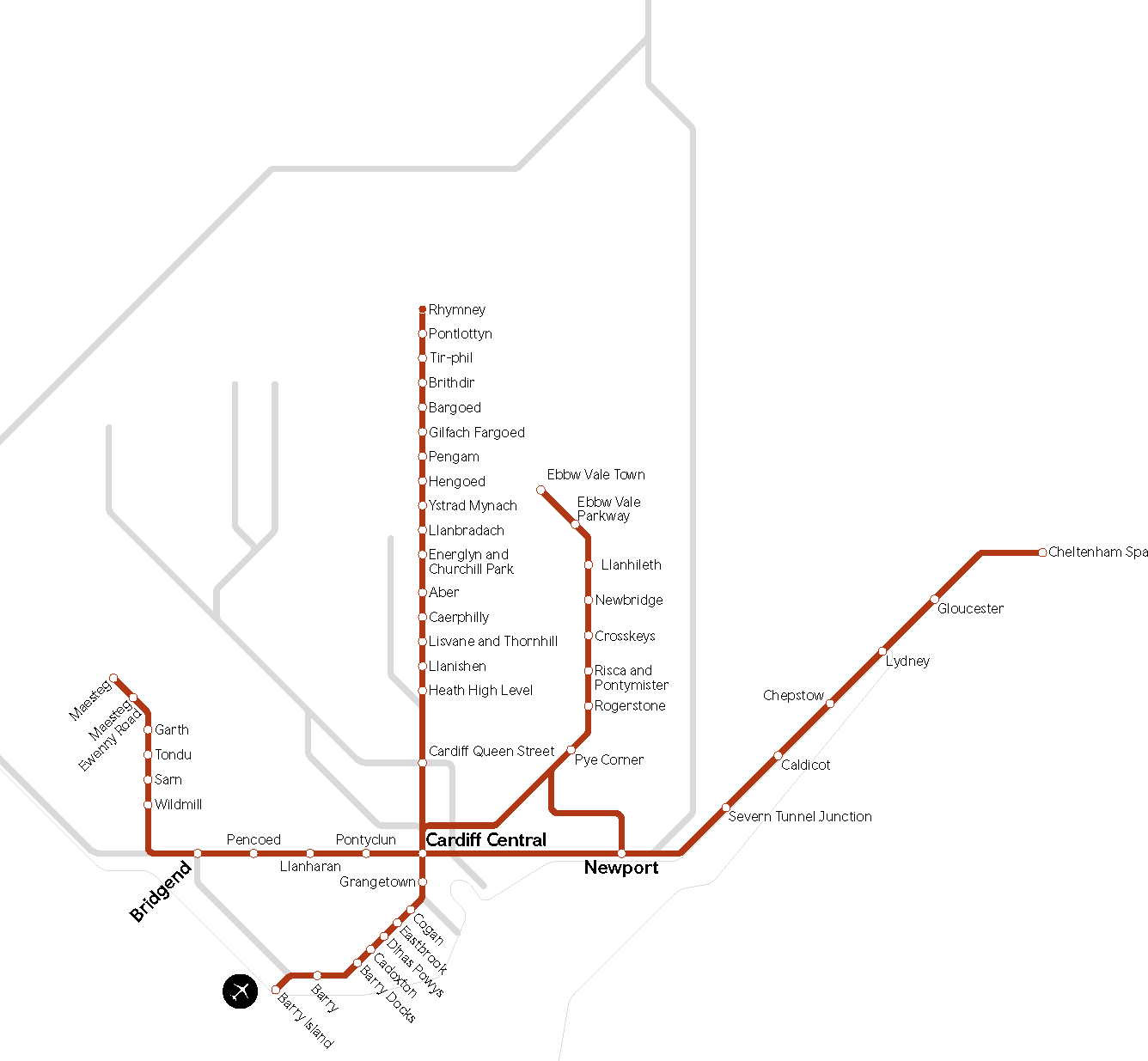
Routes
These are the most common routes where you’ll find Class 231 trains.
- Maesteg to Ebbw Vale.
- Rhymney to Cardiff and Barry Island.
- Cardiff - Cheltenham Spa.
Carriage layout
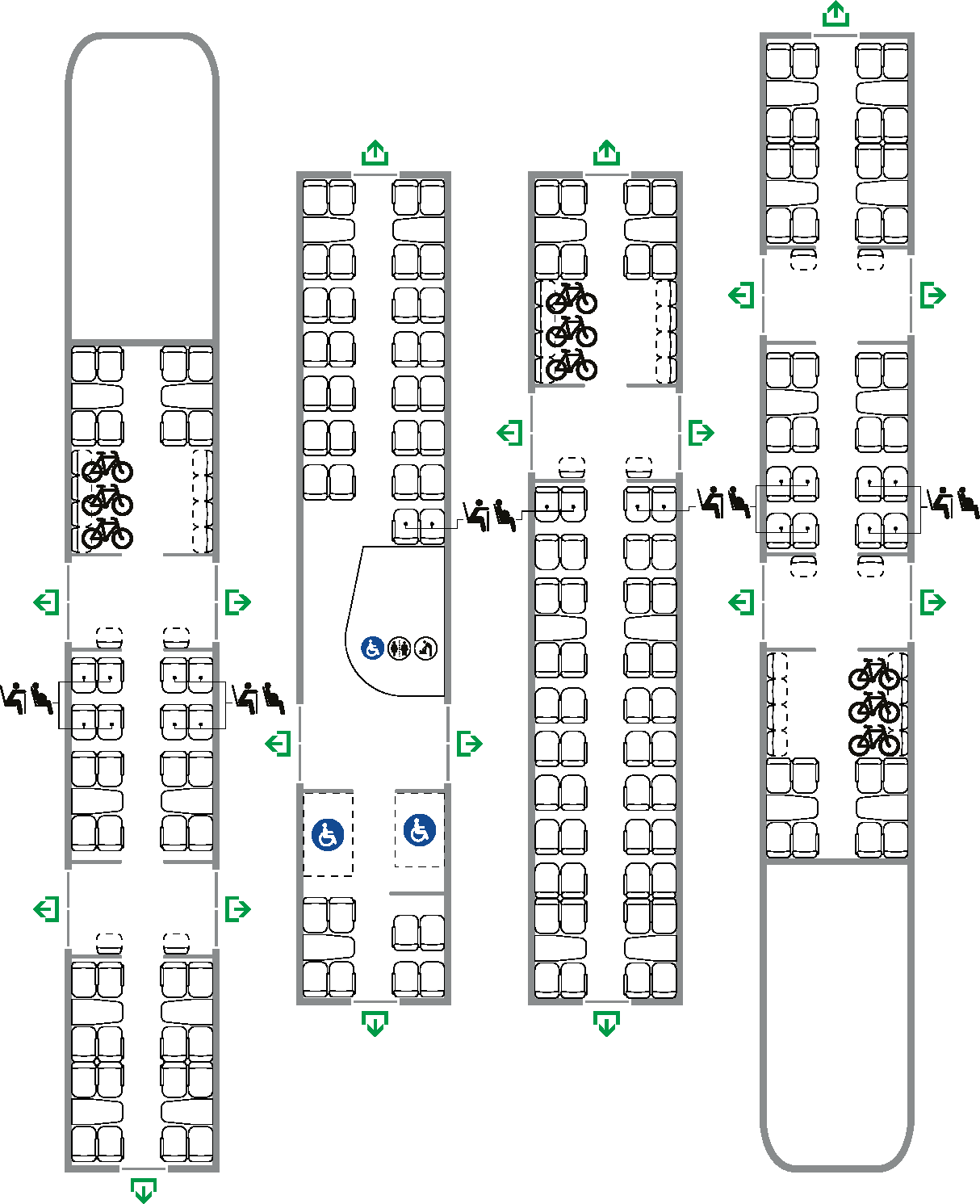
Accessibility
Two wheelchair users' spaces.
One universal accessible toilet.
Door width 800mm.
22 priority seats.
Other features
170 seats and 34 additional tip-up seats.
Flexible space for nine cycles.
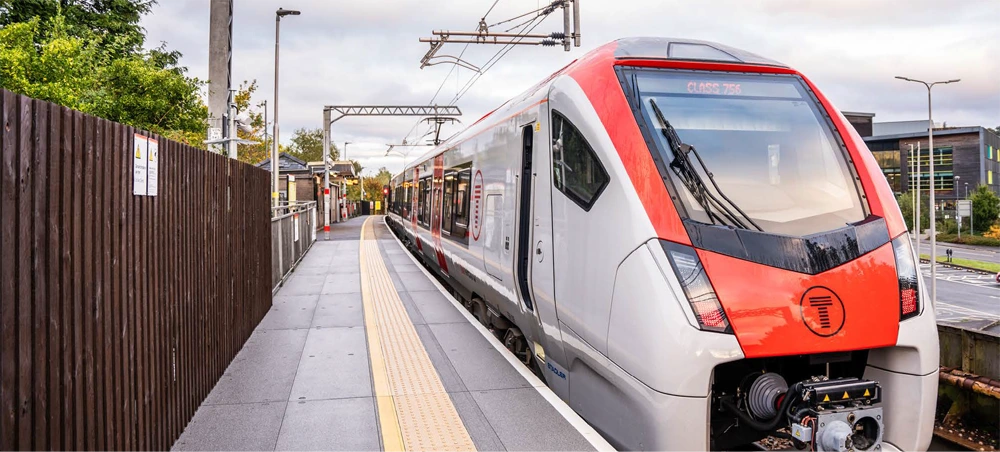
Class 756 Flirt
Built between 2020 and the present, Class 756 Flirts are three and four carriage trimode trains using diesel, electricity and battery.
We have 24 of these brand new trains in our fleet in total - seven with three carriages and 17 with four carriages.
Routes
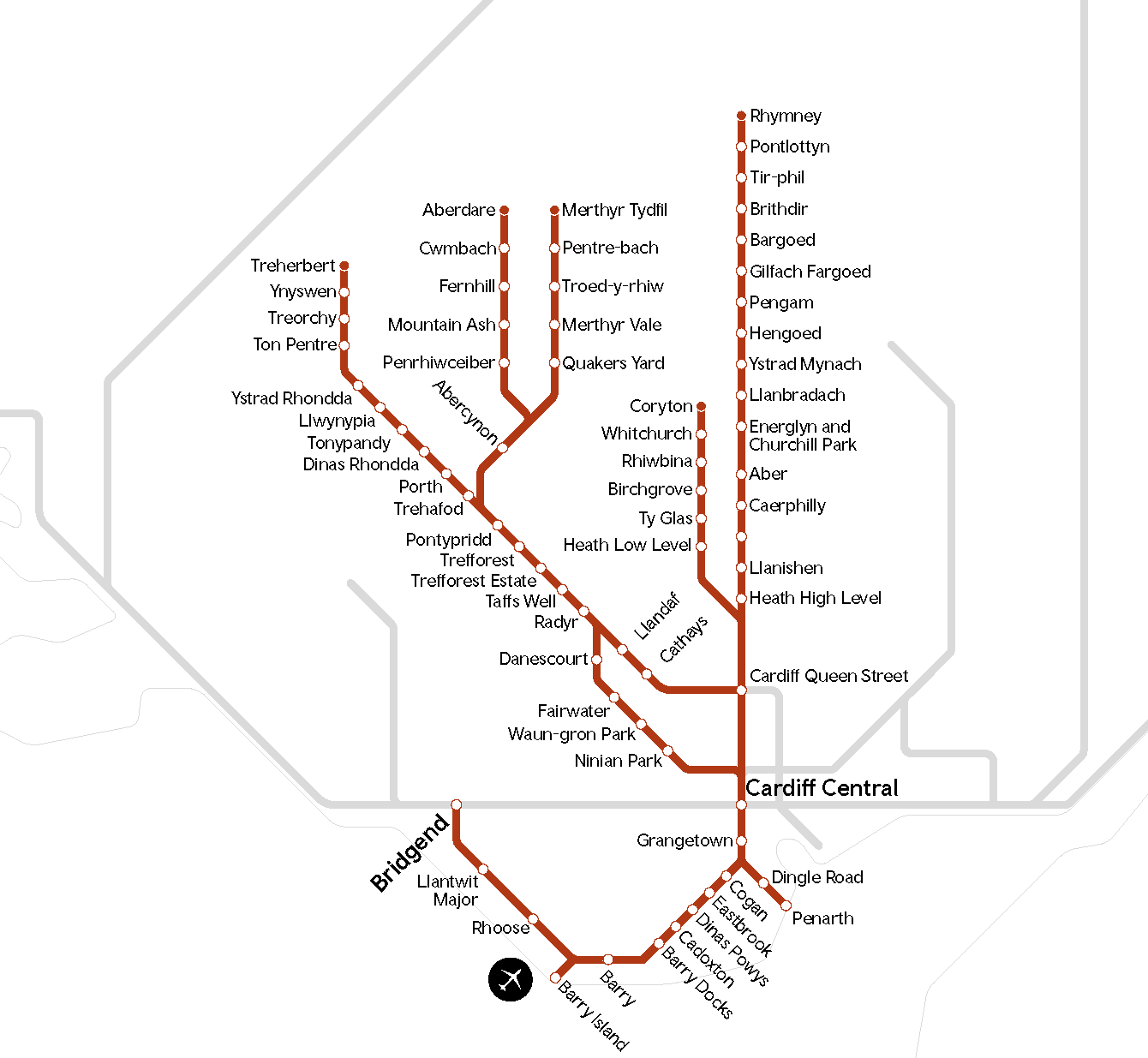
These are the most common routes where you'll find Class 756 trains.
- Treherbert to Cardiff.
- Aberdare to Merthyr Tydfil via the City Line and Cardiff Central.
- Coryton to Penarth and Caerphilly.
- Rhymney to Cardiff, Barry Island and Bridgend via the Vale of Glamorgan.
Carriage layout
Three carriages
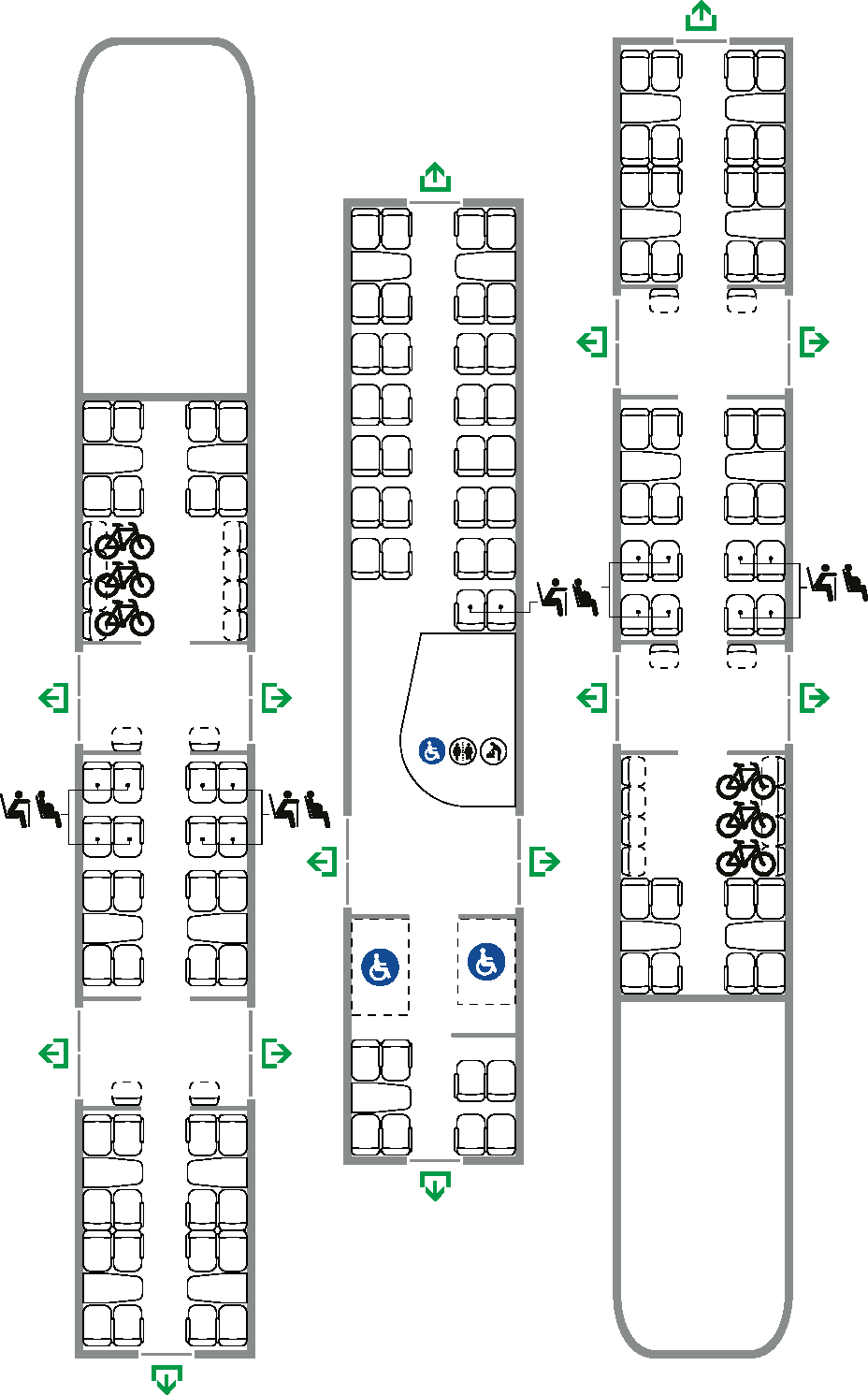
Accessibility
Two wheelchair users' spaces.
One universal accessible toilet.
Door width 800mm.
18 priority seats.
Other features
118 seats and 24 additional tip-up seats.
Flexible space for six cycles.
Carriage layout
Four carriages
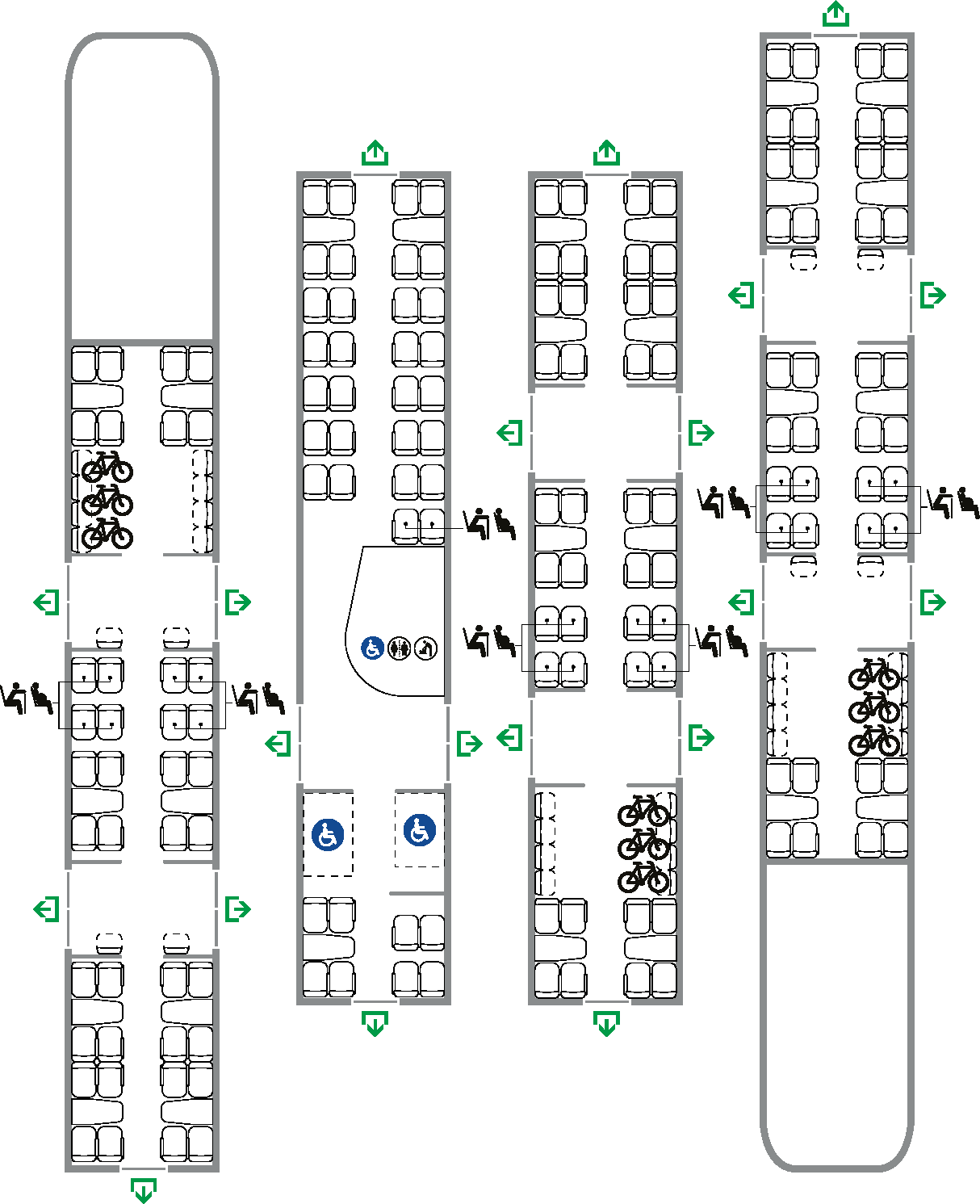
Accessibility
Two wheelchair users' spaces.
One universal accessible toilet.
Door width 800mm.
26 priority seats.
Other features
158 seats and 32 additional tip-up seats.
Flexible space for nine cycles.
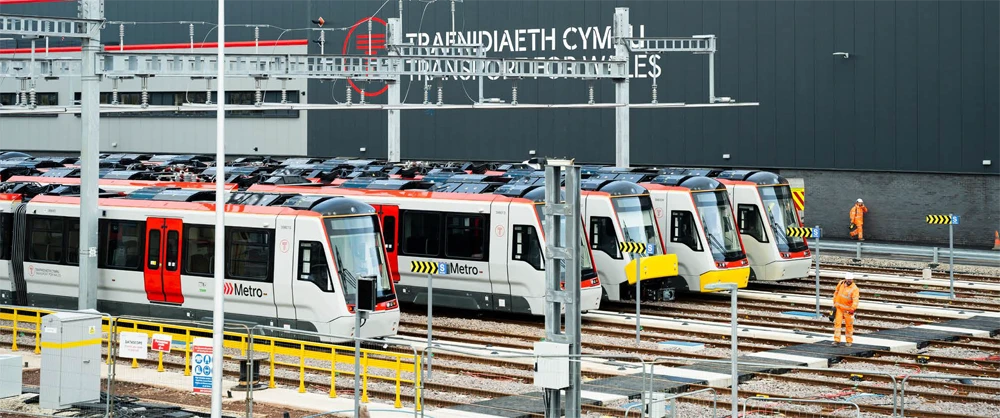
Class 398 Citylink
Built between 2020 and the present, Class 398 Citylinks are three carriage tram-trains using electricity and battery.
Roll out will start in 2026* and once completed we will have 36 of these brand new tram-trains in our fleet.
Please note that there are no toilets on board. Toilet facilities will be available at stations along
the route, with a maximum of 20 minute intervals between stops.
* The 398s started to roll out in June 2026 on the direct Pontypridd to Cardiff Bay services. Toilets are available at Pontypridd, Treforest, Radyr and Cardiff Queen Street stations on this route.
Routes
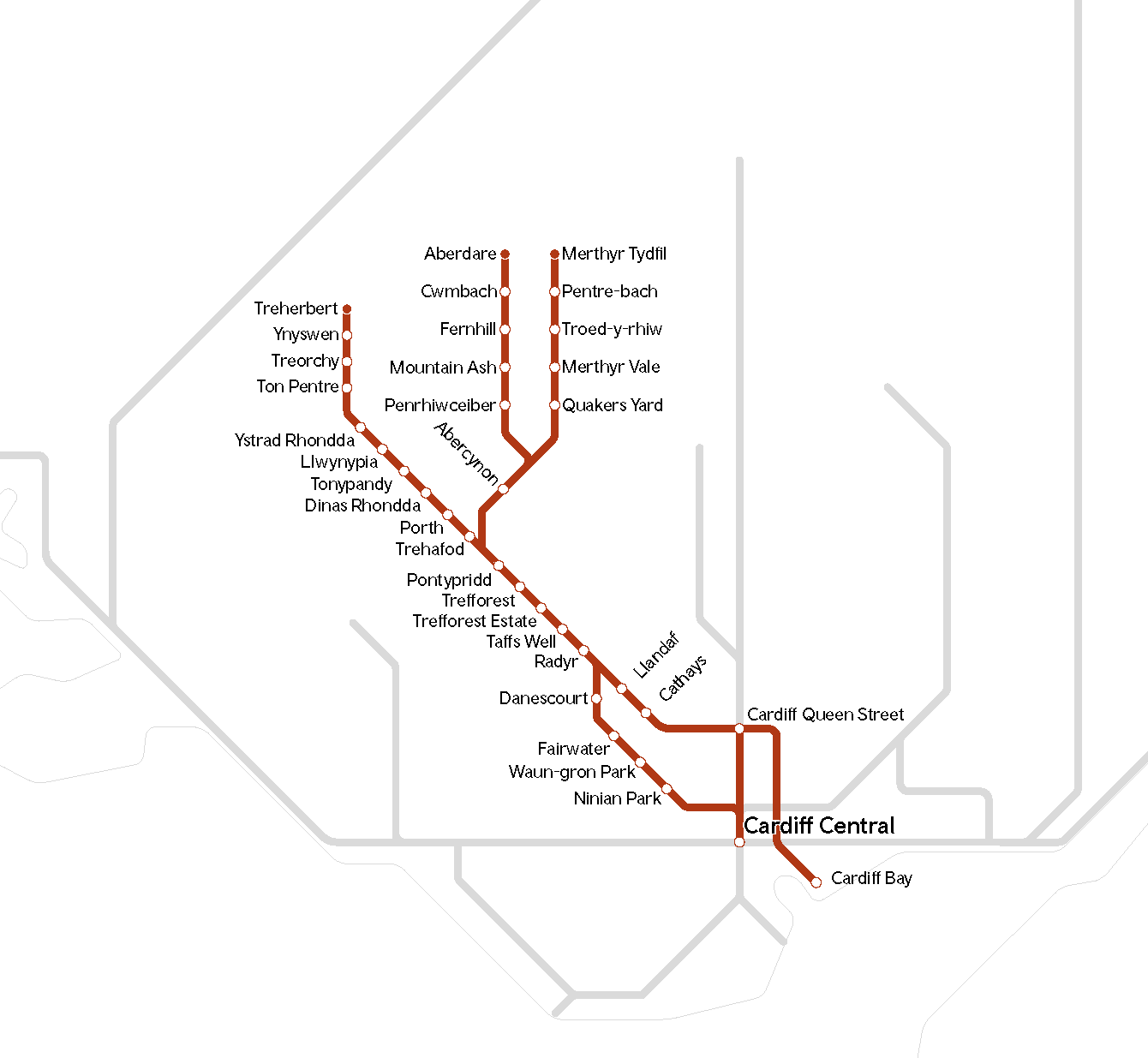
These are the most common routes where you'll find Class 398 Citylink trains, following the launch in Spring 2026.
- Treherbert to Cardiff.
- Aberdare to Merthyr Tydfil via the City Line and Cardiff Central.
- Pontypridd to Cardiff Bay.
Carriage layout
The carriage layout and on board facilities are subject to change as these trains are still in production and some small changes may be made before they are introduced to our network.
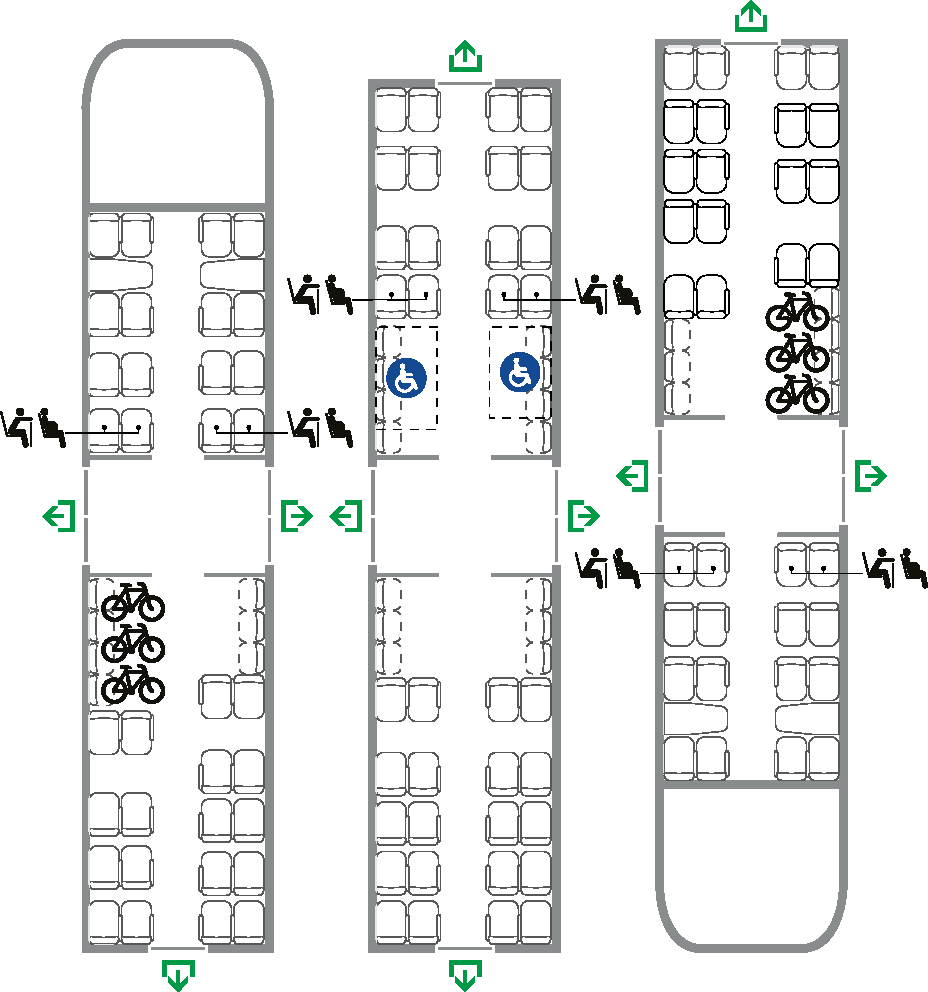
Accessibility
Two wheelchair users' spaces.
12 priority seats.
Other features
104 seats and 28 additional tip-up seats.
Flexible space for six cycles.
-
Did you know?Join our customer panelShare your views and help shape the way Wales travels.Have your say