Before the railways
Cardiff Central railway station stands proudly at the heart of Wales’ capital. Every day, thousands of people pass through its doors on journeys to work, school, concerts and holidays. But Cardiff Central is more than a place to catch a train. It sits on land shaped by thousands of years of human history and is part of a much bigger story about how Cardiff grew from a small riverside settlement into a modern capital city.
As part of the Cardiff Central Enhancement Programme, we’re travelling back in time to explore the station’s fascinating past and the landscape around it. Through a series of blogs, videos and images, we’ll uncover how this place has changed over centuries. In this first blog, we look at the story of Cardiff before the railways arrived and before the station itself existed.
A landscape shaped by ancient communities
Human beings lived in the Cardiff area long before the city itself was ever imagined. Archaeological evidence shows people have been settling here for thousands of years. Just west of today’s Cardiff, the St Lythans burial chamber dates back around 6,000 years to the Neolithic period. This ancient stone monument shows that early farming communities lived, worked and buried their dead in the landscape.
The hills around Cardiff also tell an early story. On Garth Hill, Bronze Age burial mounds still overlook the land below, while Iron Age hillforts such as Caerau Hillfort reveal where communities once gathered for protection. These early settlers were part of long migration patterns that followed the end of the last Ice Age, as rising sea levels shaped the island of Great Britain and brought new groups of people to Wales.
The Silures and the Roman arrival
Before the Romans arrived, Cardiff lay within the territory of the Silures, a powerful Iron Age Celtic tribe. They lived across parts of what later became Glamorganshire, Monmouthshire and Brecknockshire. Their settlements and defensive earthworks laid down the first cultural foundations of the region.
Around AD 55, everything changed when the Romans arrived. They built a fort at a key strategic location where the River Taff meets the Bristol Channel. This allowed them to control the surrounding area and trade routes. The Romans called the site Caer Dyf, meaning “Fort on the Taff” a name that later evolved into the Welsh ‘Caerdydd’.
The remains of Roman walls, buildings and artefacts still lie beneath Cardiff Castle, which stands on the same site today. However, when the Romans withdrew from Britain in the 5th century, Cardiff’s importance faded. People continued to live in the area, but without a large town or city.
From castle to medieval town
Cardiff began to grow again during the Norman period. Around 1090s, Norman lord Robert FitzHamon built a motte and bailey castle inside the old Roman walls. This moment is often seen as the true start of medieval Cardiff.
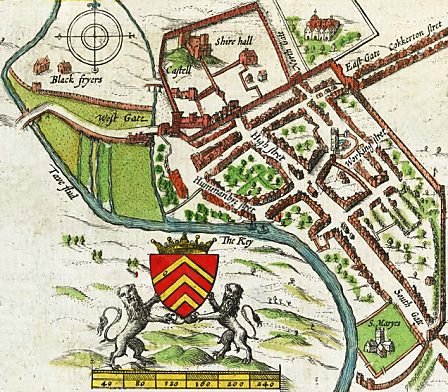
A small town formed around the castle, providing food, goods and services to the garrison. Over the next few centuries, Cardiff became more established. Stone town walls were built and religious communities arrived, including the Dominican (Black) Friars and the Franciscan (Grey) Friars. Some of their influence lives on today in place names such as Greyfriars Road.
Life was not always peaceful. In 1404, the town was attacked and burned during the Welsh uprising led by Owain Glyndŵr. Despite this devastation, Cardiff was rebuilt and remained an important local centre, particularly as a port and market town.
A town on the edge of change
By the 16th century, Cardiff was stable but still relatively small as a port town, growing slowly rather than dramatically. This remained true well into the early 1800s, even as early industry began to develop around South Wales. Coal mining in the Valleys and improvements to Cardiff’s port hinted at what was to come. The town was on the edge of transformation, but it had not yet become the powerhouse of trade it would soon be.
That transformation would arrive in the mid-19th century, with the building of new docks and the arrival of the railways. A central railway station was needed to connect Cardiff to the Valleys and beyond. The site where Cardiff Central station now stands would play a vital role.
Turning marshy land into a major railway hub would be no simple task. It would take the vision and skill of one of Britain’s greatest engineers to reshape the landscape and make a central station at Cardiff possible.
In our next blog, we’ll explore how engineering ingenuity helped transform Cardiff forever and how the railway helped drive the city’s rise to become the capital we know today…
…Join us as we continue the journey…