Case for change
Our analysis of travel to Newport station shows that over half of trips to railway stations are made by car even though around three-quarters of those travellers live within the city. This pattern is not unique to Newport, with evidence from Bridgend also showing that 72% of passengers travelled by motor vehicle, despite 90% of those surveyed living within the surrounding postcode areas within a reasonable walk, wheel, or cycle distance. This reflects a broader trend seen at many of Wales’ major stations.
By improving active travel routes around railway and bus stations, we can encourage more people to walk, wheel, and cycle.
SNPs offer a practical and strategic way to respond to this challenge, bringing benefits for both the people who use them and the partners who help deliver them.
Benefits for local communities
- Safer, more accessible routes to public transport
- Easier, more seamless journeys using multiple modes of travel
- Improved local connectivity and access to jobs, services, and social opportunities
- Flexible travel options, reducing car dependency and saving people time and money
- Healthier travel options that support active lifestyles
Benefits for delivery partners
- Alignment with a wide range of climate, health, and transport targets set out by the Welsh Government (detailed list below)
- Delivery of Active Travel Network Map goals
- Reduced car parking demand at stations, opening opportunities for more efficient land use and placemaking
- Lower highway maintenance costs through increased sustainable travel
- Strengthened local economies through better access to employment and services by enhancing catchment size and increasing range of travel to work
Strategic delivery and policy alignment
SNPs help local authorities and CJCs deliver on a wide range of Welsh Government targets and policy commitments. They directly align with:
- Welsh Government climate, health, and transport targets by prioritising active travel, as set out in the Environment (Air Quality and Soundscapes) (Wales) Act 2024 and the Active Travel (Wales) Act 2013.
- The T Network by creating integrated, multimodal travel connections across Wales.
- Llwybr Newydd: The Wales Transport Strategy, which calls for a 45% increase in journeys made by active travel or public transport by 2040.
- The Well-being of Future Generations Act 2015 by promoting sustainable, inclusive, and health-enhancing travel options.
- The National Transport Delivery Plan by enabling modal transport shift and reducing car dependency.
- The Regional Transport Delivery Plans by focusing on the areas around stations, key nodes in the T Network. SNPs can play a central role in shaping more integrated, inclusive and sustainable regional transport systems, as set out in the four Regional Transport Delivery Plans.
- The Net Zero Wales targets by enabling a shift to low-carbon and active modes of travel. Active Travel infrastructure is a key contributor to reducing transport emissions.
Incorporating Station Network Plans into the Regional Transport Delivery Plans will help ensure that investment is targeted where it delivers the greatest impact.
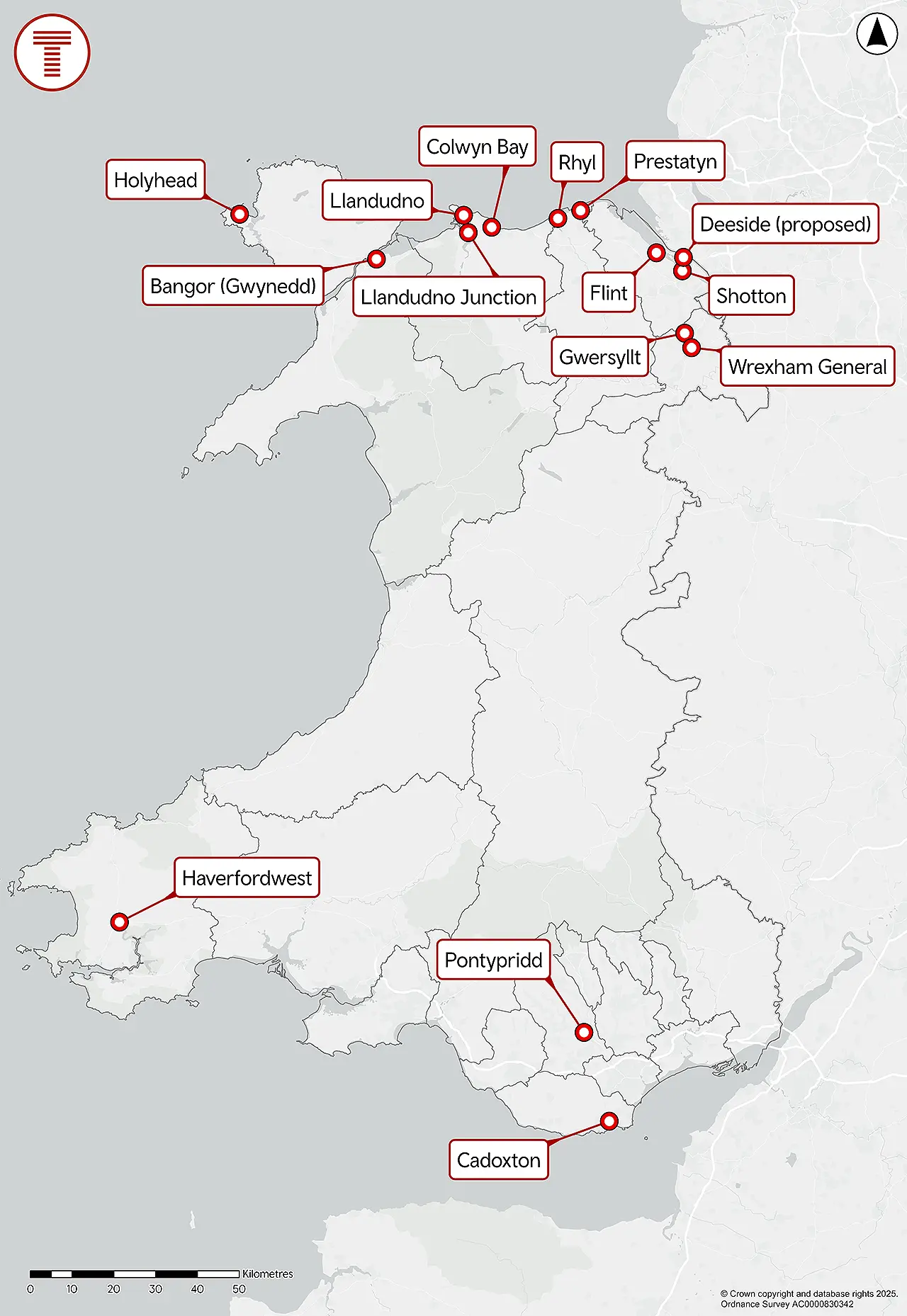
To date, 15 Station Network Plans have been developed - some in collaboration with Transport for Wales, others led independently by local authorities using TfW’s methodology. The map below shows where these plans have been developed, highlighting stations with SNPs currently in progress, each one marking a step toward a more connected and inclusive T Network.
-
Station Network PlansNeed support with your SNP projectOur team can help with funding options and technical advice.Contact us